Table of Contents
ToggleA dishwasher that’s suddenly howling like a garbage disposal or grinding like a chainsaw doesn’t just wreck the peace of your kitchen, it’s usually a sign something’s wearing out or stuck where it shouldn’t be. Most loud dishwasher noises can be traced to a handful of mechanical issues, many of which you can diagnose and fix yourself without calling in a repair tech. Before you resign yourself to expensive service calls or start shopping for a replacement, it’s worth spending 20 minutes with a flashlight and a screwdriver to pinpoint the culprit. This guide walks through the most common causes of dishwasher noise and the practical fixes that’ll get your machine back to running quietly.
Key Takeaways
- Most loud dishwasher noises—grinding, humming, rattling, or squealing—stem from debris, loose parts, or worn bearings and can be diagnosed in 20 minutes with basic tools.
- Grinding sounds typically indicate foreign objects (glass shards, fruit pits, or food debris) in the wash pump; clear the tub and inspect the spray arm bearing before considering motor replacement.
- Humming or buzzing during the wash cycle usually signals a clogged impeller or failing circulation pump; check the sump filter and spin the impeller by hand to identify obstructions.
- Rattling and clanking are often the easiest to fix—ensure spray arms are properly seated, check for loose racks or slipped utensils in the silverware basket, and soak spray nozzles in vinegar to remove mineral deposits.
- A high-pitched squeal at the start of a cycle suggests inlet valve problems, while mid-cycle squealing points to worn motor bearings; replace inexpensive inlet valves ($25–$60) before committing to motor replacement.
- Prevent future dishwasher noise by scraping dishes instead of rinsing, cleaning the filter monthly, checking spray arms regularly, using rinse aid, and running vinegar cycles to prevent mineral buildup in hard-water areas.
Common Causes of Dishwasher Noise
Dishwasher noise usually falls into one of a few distinct categories: grinding, humming, rattling, or squealing. Each sound points to a different mechanical issue.
Grinding typically means something hard, like a broken glass fragment, a pit from a cherry, or a piece of ceramic, has found its way into the wash pump or chopper assembly. It can also signal worn bearings on the spray arm hub.
Humming or buzzing often comes from the circulation pump struggling to move water, either because of a blockage, a failing motor, or an obstructed impeller.
Rattling or clanking is usually the result of loose parts: spray arms that aren’t seated properly, unsecured racks, or utensils that’ve slipped through the silverware basket and are bouncing around the sump.
Squealing tends to point to motor bearings on their way out or an inlet valve vibrating under water pressure.
Nail down which sound you’re hearing and when it happens in the cycle (fill, wash, drain). That’ll narrow your troubleshooting fast.
Grinding Noises: Worn Wash Arm Bearings or Foreign Objects
If your dishwasher sounds like it’s chewing gravel, the first step is to clear out the tub and check for debris. Power off the machine at the breaker or unplug it entirely, never work inside a live appliance.
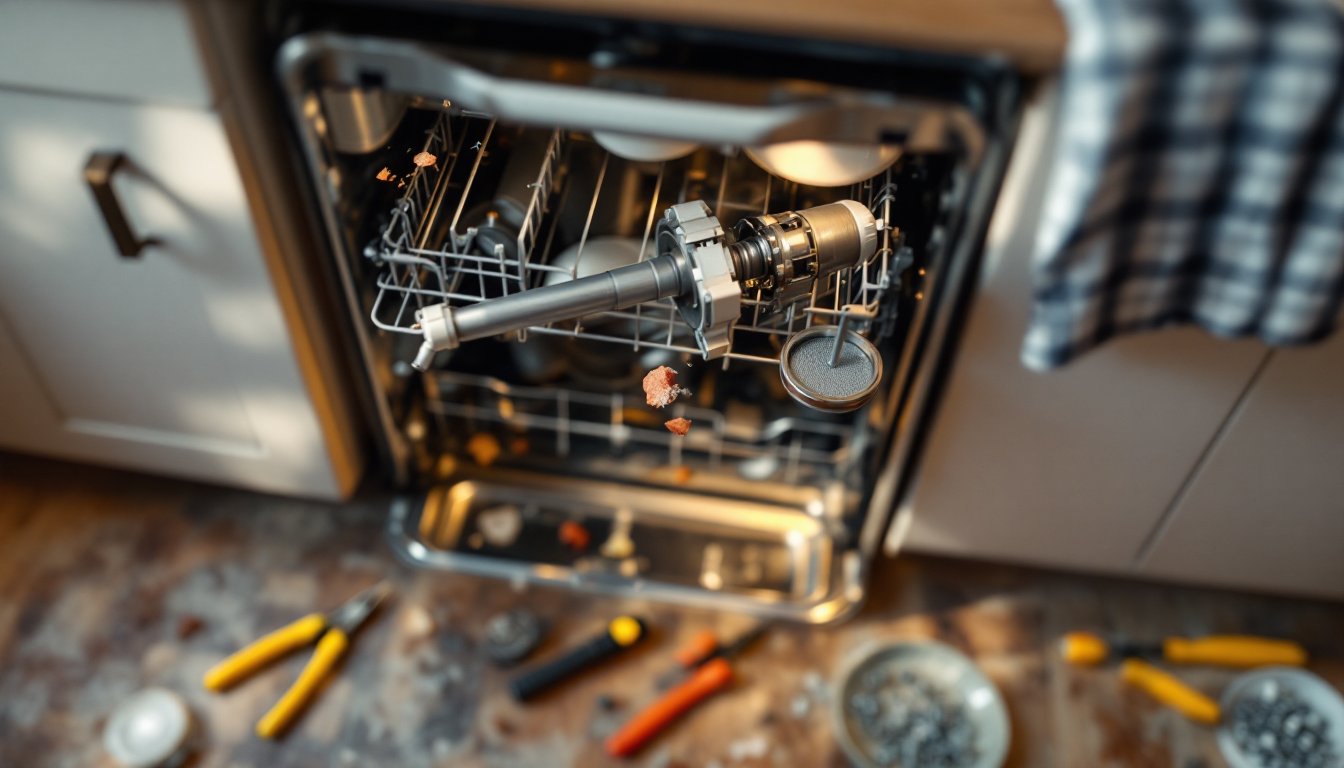
Remove the bottom rack and take out the lower spray arm (most twist counterclockwise or lift off a retaining clip). Inspect the spray arm bearing and the chopper blade assembly beneath it. Look for broken glass, fruit pits, twist ties, or small utensils lodged in the pump housing. Even a single popcorn kernel can produce a surprising racket.
If the foreign object is visible, pull it out with needle-nose pliers. If the grinding persists after you’ve cleared debris, the wash arm bearing itself may be worn. These plastic bushings can crack or deform over time, especially in hard-water areas. Replacement bearings are model-specific and usually run $10–$25. You’ll find the part number in your owner’s manual or on the manufacturer’s parts site.
Some dishwashers have a hard-food disposer (a small grinder similar to a garbage disposal). If that’s jammed, you may need to remove the spray arm tower and access the chopper from below. This job gets tight in some models and may require removing the kickplate and lower access panel. Wear gloves, chopper blades are sharp.
Once you’ve cleaned and reassembled everything, run an empty test cycle. If the grinding’s gone, you’re done. If not, the circulation pump bearings may be shot, which is a more involved repair.
Humming or Buzzing Sounds: Circulation Pump Issues
A loud hum or buzz during the wash cycle usually means the circulation pump is working harder than it should. This can happen when the impeller (the fan-like component that moves water through the spray arms) is obstructed by debris or when the pump motor itself is failing.
Start by checking the sump and pump intake. With the power off, remove the spray arm and filter assembly. Most dishwashers have a cylindrical or flat mesh filter at the bottom of the tub, twist or lift it out per your model’s design. Underneath, you’ll see the sump cover. Remove any screws or clips holding it in place and lift it out.
Inspect the impeller. It should spin freely by hand. If it’s stiff or won’t turn, there’s likely something wedged in there, food buildup, a label from a jar, or a shard of plastic. Clean out any obstruction and check that the impeller blades aren’t cracked.
If the impeller spins freely but the hum persists, the pump motor bearings may be wearing out. Motor replacement isn’t especially difficult on most models, but it does require removing the dishwasher from the cabinet to access the underside. You’ll disconnect the water supply line, drain hose, and electrical connections. Shut off water at the shutoff valve under the sink and have a shallow pan and towels ready to catch residual water.
Replacement circulation pumps run $80–$200 depending on make and model. For older machines, weigh the repair cost against replacement. If the dishwasher is over 10 years old and you’re facing a $150 pump plus labor, a new unit may make more sense. Many appliance maintenance guides offer lifespan benchmarks to help with that call.
Rattling or Clanking: Loose Spray Arms and Parts
Rattling is often the easiest noise to fix, and the most preventable. Start by making sure the spray arms are properly seated. The lower arm should click or snap into place on its hub: the upper arm (and mid-level arm, if your model has one) should be secure on the water supply tube.
Spin each spray arm by hand. It should rotate smoothly without wobbling or hitting the rack. If it’s loose, check for a missing retaining nut, clip, or snap ring. These small plastic or metal fasteners can crack and fall off over time. Replacement clips are inexpensive and available through appliance parts suppliers.
Next, pull out the racks and shake them. Loose tines, broken wheels, or wobbly rack rails can all produce clanking during the wash cycle. Tighten or replace any damaged components. Rack repair kits with tines and end caps are widely available.
Check inside the silverware basket for utensils that may have slipped through the slots. A fork bouncing around the sump will sound like a demolition derby.
Finally, inspect the spray arm nozzles. If they’re clogged with mineral deposits, water pressure can cause the arm to vibrate or chatter against the rack. Soak the arms in a 1:1 solution of white vinegar and warm water for 30 minutes, then clear each nozzle with a toothpick or small wire.
If the rattling happens only during the drain cycle, the issue may be the drain hose slapping against the cabinet or the drain pump itself. Secure any loose hose clamps and make sure the hose has a gradual rise to the drain connection (no kinks or sags). Many kitchen appliance resources emphasize proper installation to avoid these headaches.
Squealing Noises: Faulty Motor Bearings or Inlet Valve Problems
A high-pitched squeal during operation often points to worn motor bearings or a vibrating water inlet valve. The timing of the noise helps pinpoint the source.
If the squeal happens at the start of the cycle as the dishwasher fills, suspect the inlet valve. This solenoid-operated valve controls water flow from your home’s supply line into the tub. When the internal diaphragm or seal wears out, water rushing through can cause a whistle or squeal. With the dishwasher off, locate the inlet valve (usually under the tub, accessible from the front kickplate or by pulling the unit out). Check for debris in the screen filter at the inlet connection. A clogged screen reduces flow and can create turbulence and noise. Clean the screen with an old toothbrush.
If the screen’s clear but the squeal persists, the valve itself may need replacement. Inlet valves run $25–$60 and are straightforward swaps: shut off the water, disconnect the supply line and wire harness, unbolt the old valve, and install the new one. Use Teflon tape on any threaded connections to prevent leaks.
If the squeal happens during the wash or drain cycle, the motor bearings are the likely culprit. Bearings wear out over time, especially in hard-water areas where mineral buildup accelerates friction. Replacing motor bearings usually means replacing the entire motor assembly, as most dishwasher motors are sealed units.
Motor replacement requires disconnecting hoses, wiring, and mounting hardware from beneath the tub. It’s a manageable DIY job if you’re comfortable with basic plumbing and electrical disconnects, but it does take patience. If you’re not confident working under the machine, this is a good time to call a pro.
Before committing to a motor replacement, check whether your dishwasher is still under warranty or if the manufacturer has issued any service bulletins for your model. Some units have known bearing issues that may be covered. Trusted home appliance reviews often track common failure points by brand and model year.
How to Prevent Future Dishwasher Noise Problems
Most dishwasher noise issues are preventable with routine maintenance and good loading habits.
Scrape, don’t rinse. Modern dishwashers are designed to handle food residue, but large chunks, bones, pits, labels, should be scraped into the trash before loading. Pre-rinsing isn’t necessary and can actually reduce detergent effectiveness.
Run the disposal. If your dishwasher drains into a garbage disposal, run the disposal before starting a load. A clogged disposal can back up into the dishwasher drain line and cause humming or gurgling noises.
Clean the filter monthly. Remove and rinse the filter under hot water. For stubborn buildup, soak it in vinegar or use a soft brush. A clogged filter forces the pump to work harder, which accelerates wear.
Check spray arms every few months. Pull them out, inspect the nozzles, and clear any deposits. Spin them by hand to ensure they’re not binding.
Use rinse aid. It’s not just for spot-free glassware. Rinse aid helps water sheet off dishes and prevents mineral buildup inside the pump and on spray arm bearings, especially in areas with hard water.
Inspect hoses and connections annually. Look for kinks, cracks, or loose clamps on the drain hose and inlet line. Tighten any fittings that show signs of dripping.
Avoid overloading. Cramming too many dishes into the racks can prevent spray arms from rotating freely, leading to rattling and poor cleaning. Follow the loading diagrams in your owner’s manual.
If your water has high mineral content, consider running a dishwasher cleaner or a cycle with a cup of white vinegar in an empty tub every couple of months. This dissolves scale and keeps internal components moving smoothly.
Conclusion
Why is your dishwasher so loud? Usually it’s debris in the pump, a loose spray arm, or worn bearings, all fixable with basic tools and an hour of your time. Start with the simple checks: clear the filter, inspect for foreign objects, and make sure everything’s seated properly. If the noise points to a failing motor or pump, weigh the repair cost against the age of the machine. With regular cleaning and smart loading, most dishwashers will run quietly for years.