Table of Contents
ToggleIf you’re tired of dated cathedral arches and fussy raised panels, slab kitchen cabinets might be exactly what your kitchen needs. These flat-panel doors have become the go-to choice for homeowners chasing clean lines and a contemporary look, and they’re not just for minimalists anymore. Slab cabinets work in everything from Scandinavian-inspired kitchens to warm transitional spaces. They’re easier to clean than their ornate cousins, simpler to paint or refinish, and surprisingly versatile when it comes to materials and finishes. Whether you’re planning a full kitchen remodel or just swapping out door fronts, understanding what makes slab cabinets tick will help you make smarter decisions about cost, durability, and style.
Key Takeaways
- Slab kitchen cabinets feature flat, unadorned panels that are easier to clean and maintain than raised-panel doors, making them ideal for busy kitchens that require low-maintenance solutions.
- Material selection is critical for slab cabinets—options range from budget-friendly MDF ($50–$150 per door) to premium acrylic panels ($200–$500+), each offering different durability and aesthetic benefits.
- Slab cabinet doors are highly versatile and work across multiple design styles, from modern minimalist to farmhouse, adapting easily through hardware changes, paint colors, and finish choices.
- Proper measurement, hinge selection, and careful alignment are essential for DIY slab cabinet door installation, as flat surfaces show every gap and misalignment.
- DIY door replacement costs $1,500–$4,000 for an average kitchen, while professional custom slab cabinetry installation typically ranges $8,000–$25,000+ depending on materials and finishes.
What Are Slab Kitchen Cabinets?
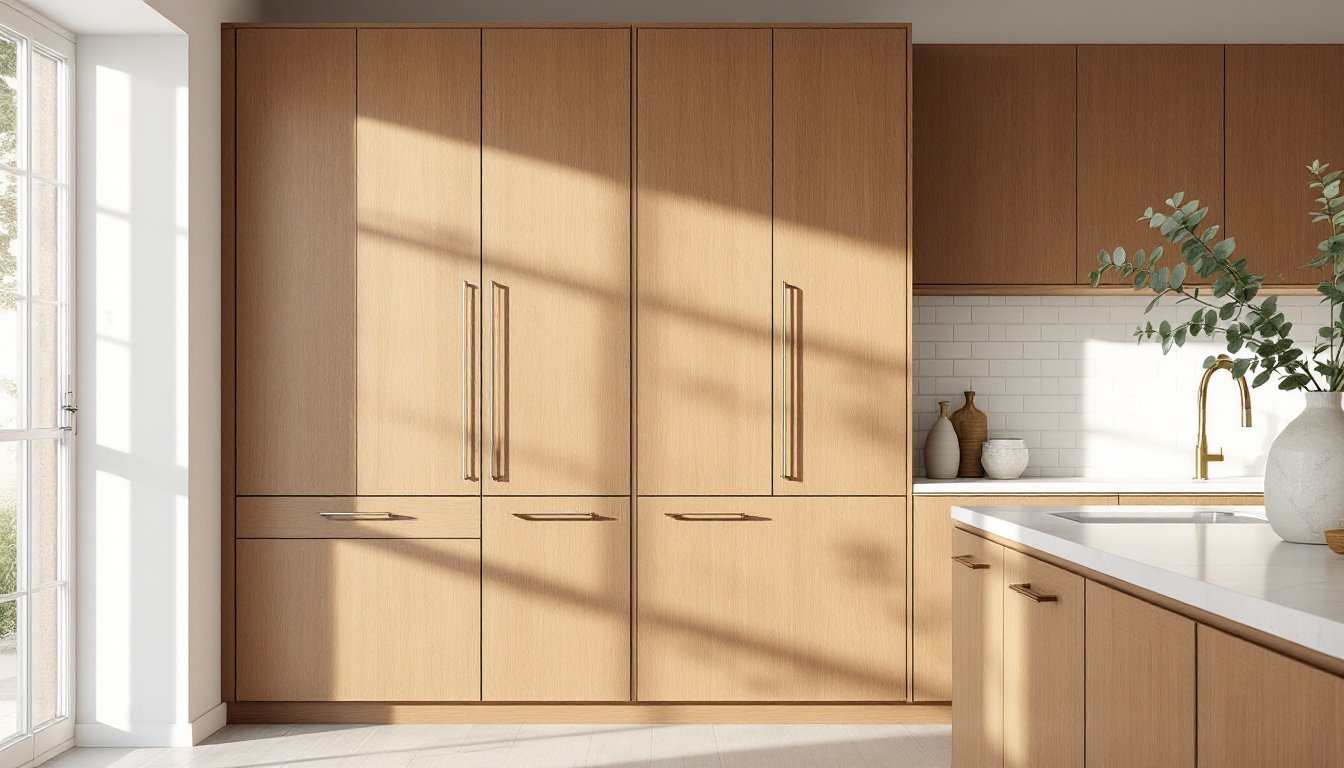
Slab cabinets feature a single, flat panel with no raised details, routed designs, or frame-and-panel construction. The door is exactly what it sounds like: a slab of material, wood, MDF, laminate, or even metal, cut to size and mounted on hinges. There’s no center panel, no decorative molding, and no beveled edges.
This simplicity is both the appeal and the challenge. Because there’s nowhere to hide, the quality of the material and finish becomes critical. A poorly sanded edge or uneven paint job will stand out immediately. That’s why many DIYers opt for thermofoil or laminate slab doors if they’re building their own cabinets, the factory finish is consistent and forgiving.
Slab doors are sometimes called flat-panel or European-style cabinets, though technically European cabinets refer to frameless construction (where the door covers the entire cabinet box, with no face frame). You can have slab doors on both framed and frameless cabinets, but the frameless version gives you the most streamlined, handleless look if that’s your goal.
They’re structurally straightforward, which can make them a good candidate for a DIY door replacement project if your existing cabinet boxes are still solid.
Why Choose Slab Cabinets for Your Kitchen?
Slab cabinets aren’t just a trend, they solve real problems, especially in kitchens where maintenance and flexibility matter.
Design Versatility and Modern Aesthetics
One of the biggest advantages of slab cabinet doors is their chameleon-like ability to adapt. Pair them with stainless steel pulls and quartz countertops for a sleek, contemporary vibe. Swap in brass knobs and a butcher block island, and suddenly you’ve got a warm, modern farmhouse feel.
Because the door itself is so minimal, the focus shifts to color, grain, and hardware. A walnut slab door will read completely differently than a high-gloss white lacquer slab, even though the door profile is identical. This makes them ideal if you like to change up your kitchen’s look over time, you can repaint, add or remove hardware, or even apply peel-and-stick veneer without fighting against an existing design.
Modern slab door kitchen cabinets also photograph well, which is why you’ll see them all over design blogs and showrooms. Their clean geometry plays nicely with open shelving, integrated appliances, and handleless push-to-open mechanisms.
Easy Maintenance and Cleaning
Here’s the part contractors won’t always mention: raised-panel doors are dust traps. Every routed groove and decorative detail collects grease, crumbs, and grime. In a busy kitchen, that means extra scrubbing.
Slab doors, by contrast, have one flat surface. You can wipe them down in seconds with a damp microfiber cloth. No toothbrush needed to dig into crevices. If you’ve got kids or you cook daily, this isn’t a minor convenience, it’s a legitimate quality-of-life upgrade.
That said, flat surfaces do show fingerprints more readily, especially on high-gloss or dark finishes. Matte and textured finishes (like wood grain or a soft-touch laminate) hide smudges better. If you’re set on a glossy look, just know you’ll be wiping down doors more often.
Popular Materials for Slab Cabinet Doors
Material choice will dictate your budget, durability, and how much elbow grease you’ll need during install or refinishing.
Solid wood is the classic option. Maple, oak, cherry, and walnut all work beautifully as slab doors, especially if you want to show off natural grain. Expect to pay premium prices, anywhere from $150 to $400+ per door depending on species and size. Solid wood can warp or expand with humidity changes, so proper finishing (front and back) is critical. It’s also heavy, so make sure your hinges are rated for the load.
MDF (medium-density fiberboard) is the budget-friendly workhorse. It’s stable, smooth, and takes paint like a dream. Because it’s engineered, it won’t warp or split the way solid wood can. MDF slab doors run $50–$150 per door and are a go-to for painted kitchens. The downside: MDF is prone to damage if it gets wet, and the edges can chip if you’re rough during install. Always prime and seal cut edges before painting.
Plywood offers a middle ground, lighter than solid wood, more moisture-resistant than MDF, and available with various veneer faces (birch, oak, maple). It’s a smart pick if you’re building doors yourself and want a material that’s forgiving to work with. PlywoodWorks well with stains or paint.
Thermofoil is MDF wrapped in a thin layer of vinyl. It comes in dozens of colors and textures, and the finish is already applied, no painting required. Kitchen organization experts often recommend thermofoil for its durability and ease of cleaning. It’s affordable ($60–$120 per door), but it can peel or discolor near heat sources like ovens or dishwashers. Don’t use harsh abrasives when cleaning.
Laminate (HPL or high-pressure laminate) is tougher than thermofoil and available in wild colors, patterns, and textures. It’s waterproof, impact-resistant, and holds up well in high-traffic kitchens. Laminate slab doors can mimic wood, concrete, or even metal finishes. Cost varies widely, $80–$200+ per door.
Acrylic and high-gloss UV-coated panels are at the top end. These are often imported and feature mirror-like finishes in bold colors. They’re scratch-resistant, fade-resistant, and incredibly easy to clean. Expect to pay $200–$500+ per door, and you’ll likely need a pro for installation since they’re heavy and unforgiving of misalignment.
How to Style Slab Cabinets in Different Kitchen Designs
Slab cabinets aren’t locked into one aesthetic. How you finish and accessorize them will determine the overall vibe.
Modern minimalist: Go for handleless slab doors in matte white, charcoal, or black. Use push-to-open hardware or recessed pulls (called finger pulls or J-channels) to keep lines unbroken. Pair with quartz or solid-surface countertops, undermount sinks, and integrated appliances. Keep upper cabinets to a minimum or skip them entirely in favor of open shelving.
Scandinavian/Nordic: Light wood slab doors (birch, ash, or light oak) combined with white or pale gray lowers. Add simple leather or wood pulls, open shelving with minimal dishware, and plenty of natural light. This style loves texture, so consider a wood grain laminate or light stain instead of paint.
Industrial: Pair dark or medium-toned wood slabs with metal accents, think black steel pulls, pipe shelving, exposed brick, and concrete countertops. You can also find metal slab doors (steel or powder-coated aluminum) if you want to lean all the way in. This look works especially well in loft-style spaces or urban kitchens.
Transitional: Warm wood slab uppers with painted lowers (navy, sage, or soft gray). Add classic hardware like cup pulls or bin pulls in brushed brass or nickel. Pair with a marble or butcher block countertop and a subway tile backsplash. Slab-front examples show how two-tone palettes can add depth without losing the clean look.
Modern farmhouse: Yes, slab cabinets can work here too. Use a matte painted finish in cream, sage, or powder blue. Add traditional hardware (knobs, not pulls), open shelving, and a farmhouse sink. The slab door keeps things from feeling too fussy, while the color and accessories bring in warmth.
No matter the style, hardware makes or breaks the look. Slab doors are blank canvases, minimal hardware keeps things modern, while ornate knobs or vintage pulls can shift the mood entirely.
Installation Tips and Cost Considerations
If you’re replacing doors only (not the full cabinet boxes), this is a manageable DIY project, assuming your boxes are square, level, and structurally sound.
Measure carefully. Slab doors are unforgiving. Measure the cabinet opening width and height, then account for overlay (how much the door covers the face frame). Standard overlay is 1/2 inch on framed cabinets, but frameless cabinets often use full overlay. If you’re ordering custom doors, double-check dimensions and hinge placement before finalizing.
Hinge selection matters. European-style concealed hinges (like Blum or Salice) are the standard for slab doors on frameless cabinets. They’re adjustable in three directions, which is critical for getting doors aligned perfectly. For framed cabinets, you can use traditional butt hinges or semi-concealed hinges, but concealed hinges give a cleaner look. Budget around $3–$8 per hinge depending on quality.
Prep and finish. If you’re painting or staining raw doors yourself, do it before install. Sand to 220-grit, prime (especially MDF edges), and apply at least two topcoats. Let doors cure fully (48–72 hours) before hanging. Use a foam roller for paint to avoid brush marks on flat surfaces, or invest in a HVLP sprayer if you’re doing a whole kitchen.
Alignment takes patience. Slab doors show every misalignment. Use a level and take your time adjusting hinges. Expect to spend 10–15 minutes per door getting gaps even. A consistent 1/8-inch reveal between doors looks professional: anything wider starts to look sloppy.
Cost breakdown: DIY door replacement (materials only) runs $1,500–$4,000 for an average 10×10 kitchen, depending on material. Add another $500–$1,200 if you’re hiring someone to paint or install. Full custom slab cabinetry installed by a pro typically ranges $8,000–$25,000+ for the same footprint, depending on material, finish, and hardware.
If you’re keeping existing boxes and just swapping doors, this doesn’t typically require a permit. But if you’re doing structural changes (moving plumbing, gas lines, or electrical), check with your local building department. Slab cabinet basics can give you more insight into when pros are worth the investment.
One last heads-up: lead times for custom doors can stretch 6–12 weeks, especially for specialty finishes or materials. Plan accordingly if you’re on a timeline.
Slab kitchen cabinets prove that simple doesn’t mean boring. With the right material, finish, and hardware, they can anchor a kitchen that’s as practical as it is good-looking. Whether you’re painting MDF doors in your garage or ordering high-gloss acrylic panels from overseas, the clean lines and easy maintenance make them a solid investment for anyone who actually uses their kitchen.