Table of Contents
ToggleBellevue’s housing market has always leaned toward modern, high-value properties, and homeowners know that a dated bathroom can drag down resale potential faster than almost any other room. Whether it’s a cramped master ensuite in a ’90s Colonial or a barely-functional hall bath in a mid-century split-level, a well-executed remodel delivers comfort, function, and equity. This guide walks through the planning essentials for a Bellevue bathroom remodel, from budget realities and permit requirements to design trends and ROI expectations. If you’re ready to turn that avocado-tiled relic into a space you’ll actually enjoy, here’s what you need to know.
Key Takeaways
- A bathroom remodel in Bellevue typically costs $8,000–$15,000 for entry-level updates, $20,000–$40,000 for mid-range projects, and $50,000+ for high-end renovations with custom features and layout changes.
- Permit-required work includes plumbing relocation, electrical upgrades, structural modifications, and exhaust fan installation, with Bellevue reviews taking 2–4 weeks; hiring a licensed contractor ensures compliance with 2021 IRC and NEC codes.
- Popular 2026 bathroom design trends in Bellevue emphasize spa-inspired walk-in showers, natural textured materials, floating vanities, layered LED lighting, and water-efficient fixtures that appeal to luxury buyers.
- Bathroom remodels return 60–70% of cost at resale, but focus on durable materials, improved lighting and ventilation, and neighborhood-appropriate finishes rather than expanding square footage to maximize ROI.
- Hire licensed professionals for plumbing relocation, electrical work, structural changes, and complex waterproofing, while DIY-friendly tasks include demolition, painting, fixture replacement on existing lines, and straightforward tile installation.
- Keep complete permit documentation, receipts, warranties, and contractor records to reassure buyers that work was completed properly and legally, protecting your investment at resale.
Why Bellevue Homeowners Are Investing in Bathroom Remodels
Bellevue sits at the intersection of strong property values and competitive resale markets. Homeowners are sinking capital into bathrooms for three main reasons: aging infrastructure, lifestyle upgrades, and pre-sale positioning.
Many homes built between 1980 and 2000 are hitting the point where original fixtures, tile grout, and plumbing valves are failing. Leaky two-handle faucets, cracked ceramic tile, and inefficient 1.6-gallon toilets (or worse, pre-1994 models using 3.5+ gallons per flush) aren’t just cosmetic problems, they’re water damage waiting to happen. Catching these issues during a planned remodel is cheaper than emergency repairs after a subfloor rots out.
Beyond maintenance, homeowners want modern conveniences: heated floors, walk-in showers with frameless glass, double vanities, and improved ventilation. The Pacific Northwest’s damp climate makes proper moisture management critical, so upgraded exhaust fans (rated at 50+ CFM for standard baths, higher for larger spaces) are non-negotiable.
Finally, sellers know that bathrooms influence buyer perception. A fresh, well-lit bathroom with contemporary finishes can differentiate a listing in a neighborhood where every home has granite counters and stainless appliances. It’s one of the few rooms where a moderate investment consistently moves the needle on offers.
Planning Your Bathroom Remodel: Budget and Timeline Considerations
Realistic planning starts with understanding how much a Bellevue bathroom remodel actually costs and how long it takes. Skipping this step leads to sticker shock halfway through demolition.
Setting a Realistic Budget for Your Bellevue Bathroom
Entry-level refreshes, new paint, vanity swap, fixture upgrades, and re-grouting, can run $8,000–$15,000 for a standard 5×8 hall bath. Mid-range remodels that include tile replacement, new shower/tub, quality cabinetry, and updated electrical/plumbing typically land between $20,000 and $40,000. High-end projects with custom tilework, stone slab counters, luxury fixtures, and layout changes can easily exceed $50,000, especially in larger master suites.
Bellevue’s labor rates reflect the region’s cost of living. Licensed plumbers and electricians command $100–$150/hour, and skilled tile setters charge similar rates. Permit fees, inspection costs, and design services add another 5–10% to the total.
Material choices have huge budget implications. Porcelain tile at $4–$8/sq ft installed is affordable and durable, while natural stone or large-format slabs can hit $15–$30/sq ft. Vanities range from stock 24-inch units at $300–$600 to custom cabinetry at $2,500+. Fixtures span from builder-grade chrome faucets ($75–$150) to high-end brushed nickel or matte black finishes ($300–$800+).
Timeline-wise, expect 4–8 weeks for a standard remodel once permits are approved. Complex jobs with structural changes, plumbing relocation, or custom orders can stretch to 10–12 weeks. Factor in permit approval time, typically 2–4 weeks in Bellevue, before demolition even starts.
Popular Bathroom Design Trends in Bellevue for 2026
Bellevue buyers lean toward clean, contemporary aesthetics with nods to Pacific Northwest natural materials. Here’s what’s landing in 2026 remodels.
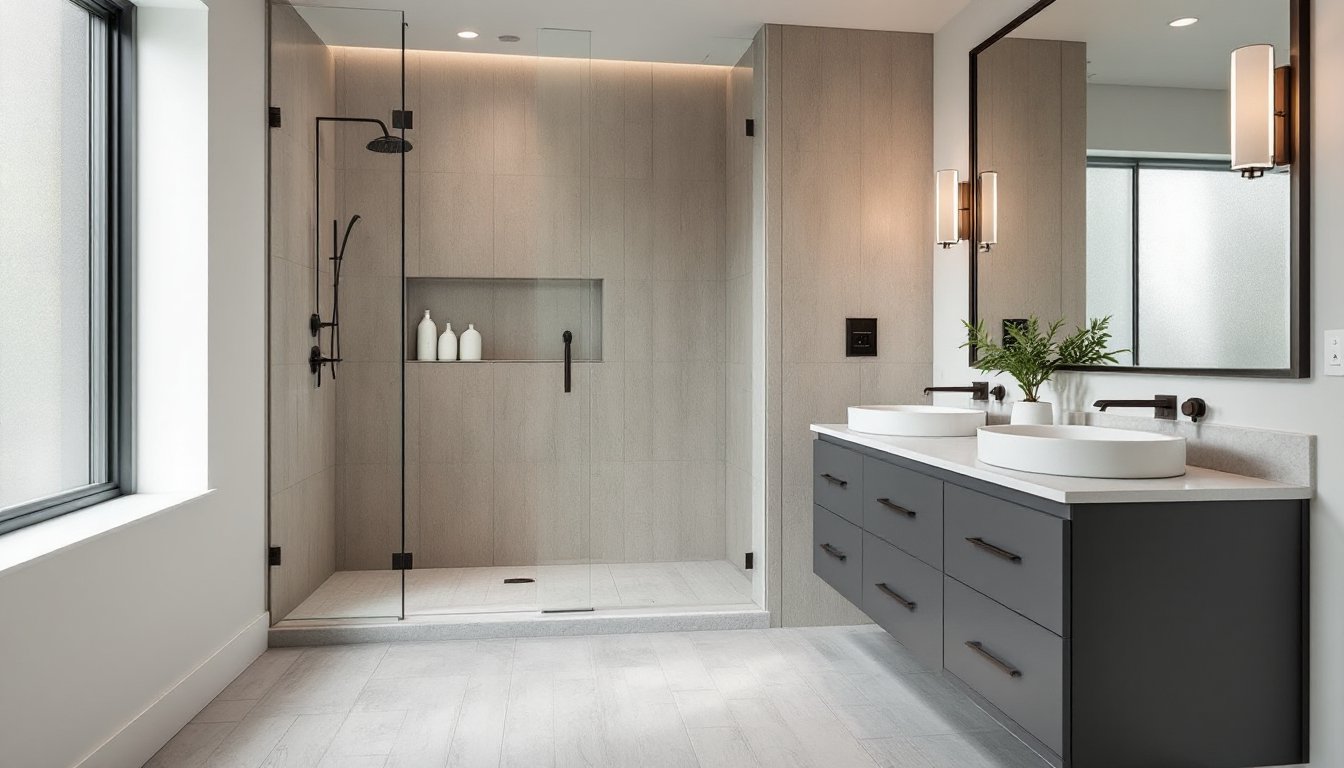
Spa-inspired showers dominate. Walk-in designs with curbless entries, linear drains, and frameless glass panels create an open feel. Thermostatic shower valves with separate volume controls and multiple spray heads are standard in upscale projects. Niche shelving (built into the tile) replaces clunky caddies.
Natural and textured materials are in. Think wood-look porcelain planks on floors, large-format concrete-effect tiles on walls, and quartz countertops with subtle veining. Homeowners are mixing matte and glossy finishes, matte black hardware paired with polished chrome fixtures, or textured wall tile contrasted with smooth floor tile.
Floating vanities remain popular for their modern look and ease of cleaning. Undermount sinks in ceramic or stone offer clean lines, while vessel sinks have mostly fallen out of favor except in highly stylized powder rooms.
Lighting has shifted toward layered approaches: recessed LED cans (4-inch or 6-inch) for general illumination, sconce fixtures flanking mirrors for task lighting, and dimmable controls for ambiance. Color temperature matters, 3000K–4000K feels bright but not clinical.
Sustainability shows up in low-flow fixtures (1.5 GPM faucets, 1.28 GPF toilets), LED lighting, and electric radiant floor heating (more efficient than old hydronic systems and easier to retrofit). Homeowners reference design sourcebooks and product guides to identify fixtures that balance aesthetics with water and energy efficiency.
Navigating Permits and Regulations in Bellevue
Bellevue enforces permitting for most bathroom remodels, and skipping this step can complicate resale or insurance claims. Here’s what triggers permits and what doesn’t.
Permit-required work includes:
- Plumbing changes: Relocating fixtures, installing new supply lines, modifying drains, or replacing water heaters.
- Electrical work: Adding circuits, relocating outlets, installing new lighting or exhaust fans on dedicated circuits.
- Structural modifications: Removing or altering walls (even non-load-bearing partitions if they contain plumbing or wiring), changing window or door openings, or modifying floor framing.
- Mechanical ventilation: Installing or upgrading exhaust fans (must meet IRC minimum ventilation requirements).
Non-permitted work (in most cases):
- Fixture replacement (toilet, vanity, faucet) in existing locations using existing plumbing.
- Cosmetic updates: paint, mirror replacement, accessory installation.
- Flooring replacement (provided no subfloor structural work is needed).
Bellevue’s Development Services Department handles permit applications. Submit plans showing fixture locations, electrical/plumbing layouts, and material specs. Expect 2–4 weeks for review. Inspections occur at key stages: rough-in (after framing/plumbing/electrical but before drywall), insulation (if exterior walls are involved), and final (after all finishes).
Failure to permit can result in fines, required tearout of completed work, or complications when selling (title companies sometimes flag unpermitted improvements). If you’re hiring a contractor, confirm they’ll pull permits and schedule inspections. DIYers can pull their own permits but must demonstrate code knowledge during plan review.
Bellevue follows the 2021 International Residential Code (IRC), 2020 National Electrical Code (NEC), and 2018 Uniform Plumbing Code (UPC). Key code items:
- GFCI protection required for all bathroom receptacles.
- Exhaust ventilation: Minimum 50 CFM intermittent or 20 CFM continuous if no operable window.
- Grab bars: Not required in new construction unless specified as accessible, but blocking should be installed during framing for future installation.
- Tempered glass required for shower/tub enclosures and any glazing within 60 inches of tub or shower floor.
Choosing Between DIY and Professional Contractors
Some bathroom tasks are approachable for skilled DIYers: others require licensed pros. Here’s the breakdown.
DIY-friendly tasks:
- Demolition: Removing old tile, vanity, toilet, and fixtures. Wear safety goggles, dust mask, gloves, and hearing protection when using a reciprocating saw or oscillating multi-tool. Watch for hidden plumbing and wiring.
- Painting and prep: Priming moisture-prone areas with stain-blocking primer and applying semi-gloss or satin finish paint.
- Installing pre-fabricated vanities, mirrors, shelving, and accessories.
- Replacing fixtures (faucets, toilets, showerheads) on existing supply/drain lines, provided you’re comfortable with compression fittings, PEX connections, or soldering copper.
- Tile work: Straightforward floor or wall tile over proper cement backer board or waterproof membrane. Requires a wet saw or snap cutter, notched trowel, and patience. Grout and caulk properly to prevent moisture infiltration.
Hire a pro for:
- Plumbing relocation or new rough-in: Moving drains, installing new supply lines, or working on main stacks. Mistakes here cause leaks, water damage, and code violations.
- Electrical work beyond simple fixture swaps: Adding circuits, relocating outlets, installing exhaust fans with dedicated wiring. NEC compliance and permit inspections require licensed electricians in most jurisdictions.
- Structural changes: Removing walls, altering framing, or addressing rot/mold. Load-bearing considerations and proper framing techniques aren’t guesswork.
- Custom tile work: Intricate patterns, large-format slabs, or waterproofing in complex shower builds. Poor waterproofing leads to catastrophic subfloor damage.
- Accessibility modifications: Curbless showers with proper slope and linear drains require precise execution.
When hiring, get three written estimates detailing scope, materials, timeline, and payment schedule. Verify licensing (Washington State Contractor Registration and applicable trade licenses), bonding, and liability insurance. Check references and review past projects. Searching for local remodeling contractors with verified reviews can streamline the vetting process.
If going DIY, understand that permitted work still requires inspections. Inspectors will flag improper waterproofing, incorrect electrical bonding, or plumbing code violations. Be ready to correct issues or call in a pro.
Maximizing Your Bathroom Remodel ROI in the Bellevue Market
Bathroom remodels return 60–70% of cost at resale in most markets, but Bellevue’s competitive environment can push that higher with smart choices.
Focus on function and finish quality, not square footage. Adding space (bumping out walls, annexing closets) is expensive and rarely returns full investment. Instead, improve layout efficiency: double vanities in master baths, separate toilet compartments, and walk-in showers (preferred over tub/shower combos in most adult-focused homes).
Choose durable, timeless materials. Porcelain tile outperforms vinyl or laminate in perceived value. Quartz counters resist staining and require no sealing, making them more appealing than natural stone to busy buyers. Brushed nickel or matte black fixtures feel current without being trendy.
Lighting and ventilation matter. Buyers notice dark, stuffy bathrooms. Install adequate recessed lighting (3–4 fixtures in a standard bath), quality vanity sconces, and a properly sized exhaust fan. If the existing fan is a wheezy 30-year-old model, replace it with a quiet (≤1.0 sone) 80–110 CFM unit with humidity sensor.
Don’t over-improve for the neighborhood. A $70,000 master bath in a $600,000 home can feel mismatched if comparable homes are selling in the same range without luxury baths. Align finishes with neighborhood standards, visit open houses to gauge what buyers expect.
Address deferred maintenance. Buyers will deduct for visible problems. Fix leaks, replace damaged subfloor, ensure proper waterproofing, and confirm plumbing and electrical work is up to code. Using cost estimators and project planners can help benchmark whether proposed upgrades align with typical Bellevue remodel scopes.
Timing matters. If selling within 1–2 years, prioritize cosmetic updates and essential function. If staying 5+ years, invest in features that enhance daily life, heated floors, steam showers, high-end fixtures, knowing you’ll enjoy them even if resale ROI isn’t 100%.
Finally, keep records. Permit documentation, receipts, warranty info, and contractor details reassure buyers that work was done properly and legally. Unpermitted or poorly documented remodels raise red flags and can stall transactions.