Table of Contents
ToggleChoosing a security camera isn’t just about catching package thieves on video, it’s about building a surveillance layer that works when you’re at the hardware store, on vacation, or asleep upstairs. ADT has been in the security game since 1874, but their camera lineup has evolved far beyond basic door monitoring. Understanding which ADT security camera system fits your property, how installation actually works, and what you’re paying for beyond the hardware can save homeowners from buyer’s remorse and wasted mounting holes. This guide walks through ADT’s current camera options, real-world installation considerations, pricing structures, and whether their ecosystem justifies the investment for your specific home layout and security needs.
Key Takeaways
- ADT security camera systems differ from standalone options by offering 24/7 professional monitoring, where trained agents can review footage and dispatch emergency services directly from camera feeds.
- ADT cameras require an active subscription ($45.99–$62.99/month) to access cloud storage, mobile app features, and smart alerts; without it, basic recording capabilities are severely limited.
- Professional installation of ADT security cameras typically costs $99–$199 for 1–3 cameras and is recommended for outdoor models mounted at height, ensuring proper weatherproofing and system integration.
- ADT’s lineup includes outdoor cameras with motion-activated spotlights, indoor cameras with privacy shutters, and video doorbell cameras in 1440p resolution, each designed for specific coverage areas.
- Three-year service contracts are standard with ADT, featuring early termination fees around 75% of remaining payments, making long-term commitment a critical factor before purchasing.
- ADT cameras integrate with Alexa and Google Assistant but lack Apple HomeKit compatibility, limiting options for iPhone-centric users seeking unified smart home control.
What Makes ADT Security Cameras Stand Out?
ADT’s cameras aren’t sold as standalone gadgets you grab off Amazon and mount yourself. They’re part of a monitored security ecosystem, which means 24/7 professional monitoring ties directly into the camera feed. If motion triggers an alert and you don’t respond, ADT’s monitoring center can review the footage and dispatch emergency services, something Ring or Wyze won’t do.
The cameras integrate with ADT’s Control panel, typically the ADT Command touchscreen, which acts as the central hub for sensors, locks, thermostats, and video feeds. This isn’t plug-and-play: it’s a structured system designed for whole-home protection rather than piecemeal coverage.
ADT uses encrypted video storage on their cloud servers, with footage retained for 30 to 60 days depending on your subscription tier. Video quality ranges from 1080p HD to 1440p on newer models, with infrared night vision standard across the lineup. The cameras include two-way audio, so homeowners can communicate through the camera’s speaker, useful for telling a delivery driver where to leave a package or warning off someone lingering near your garage.
One standout feature: person detection and package alerts. ADT’s AI can distinguish between a passing car, a wandering raccoon, and an actual human approaching your porch. This cuts down on false alerts and lets you set up specific notifications for package deliveries, which is more precise than generic motion zones.
But, ADT cameras require a subscription to unlock most features. Without an active plan, you lose cloud storage, mobile app access, and smart alerts. This isn’t a system for homeowners who want to buy once and run it indefinitely without ongoing costs.
ADT Camera Models and Features Explained
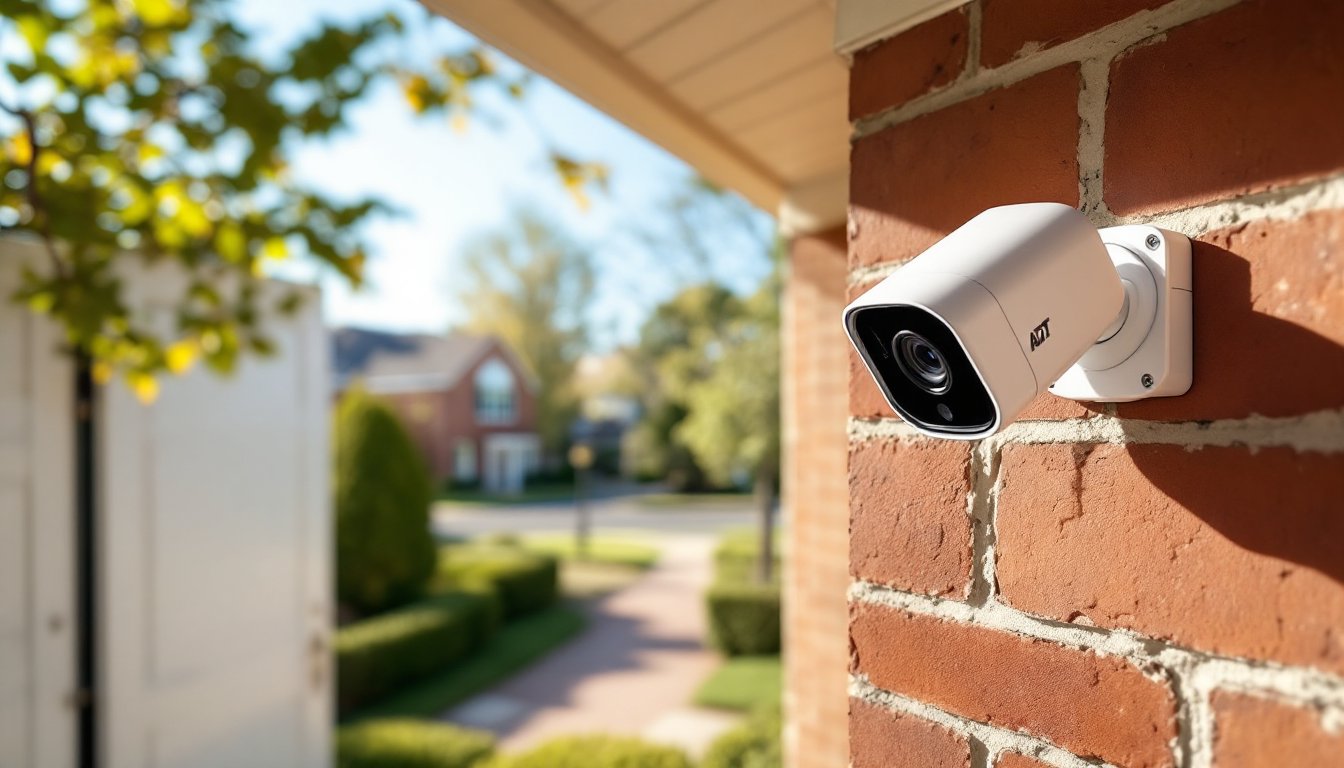
ADT’s current lineup includes several camera types, each designed for specific coverage needs. The ADT Outdoor Camera is weatherproof (IP65-rated), handles temperatures from -4°F to 122°F, and mounts to exterior walls or eaves using a swivel bracket that allows 360-degree positioning. It features a built-in spotlight that triggers on motion, which can deter prowlers and improve nighttime color recording.
The ADT Indoor Camera is smaller, designed for tabletop or wall mounting, and includes a privacy shutter you can close manually or via the app when you’re home. It’s ideal for monitoring entryways, hallways, or rooms with valuables. Resolution is 1080p, with a 130-degree field of view, wide enough to cover most interior spaces without fisheye distortion.
ADT also offers a Video Doorbell Camera, which replaces your existing doorbell and connects to your existing doorbell wiring (16-24V AC transformer required). It records in 1440p, includes HDR for handling bright porch lights and shadowy doorsteps, and sends alerts when someone presses the button or when motion is detected. The doorbell integrates with the ADT Control panel, so pressing the button can trigger announcements on Amazon Echo devices if you’ve linked accounts.
All ADT cameras support geofencing, which arms or disarms the system based on your phone’s location. This prevents false alerts when you’re moving around your own yard. For homes needing broader coverage, ADT’s system supports up to eight cameras on a single account, though professional monitoring becomes essential at that scale to manage alerts effectively.
Indoor vs. Outdoor ADT Camera Options
Choosing between indoor and outdoor ADT cameras depends on where your coverage gaps are. Outdoor cameras are the first line of defense, they capture activity before someone reaches your door. Install them at corner eaves to cover driveways and walkways, or above garage doors to monitor vehicle access. The spotlight feature on outdoor models adds a deterrent element that indoor cameras lack.
Indoor cameras excel at monitoring interior access points: back doors, basement stairwells, or rooms with firearms or prescription medications. The privacy shutter is critical here, nobody wants a camera recording while they’re home, and manual shutters are more reliable than software toggles. Indoor cameras are also lighter on bandwidth since they’re not fighting outdoor Wi-Fi signal degradation.
For homes with covered porches or enclosed patios, the outdoor camera can work in semi-sheltered areas, but avoid placing them where they’ll catch direct rain on the lens, water spots kill clarity. Indoor cameras should never be used outdoors: they’re not sealed against moisture, and temperature swings will fog the lens or crack the housing.
Installation Options: Professional vs. DIY Setup
ADT cameras are designed for professional installation, which is included in most subscription packages. A certified technician mounts the cameras, runs wiring if needed, configures the Control panel, and tests the connection to ADT’s monitoring center. This typically takes 2-4 hours for a basic system (doorbell camera plus two additional cameras).
Professional installation makes sense for outdoor cameras mounted 9-12 feet high on brick or stucco, drilling into masonry and fishing low-voltage wiring through walls isn’t a quick Saturday project. The techs bring masonry bits, weatherproof cable staples, and silicone caulk to seal entry points, which matters in climates with freeze-thaw cycles or heavy rain.
ADT does offer self-installation kits for their wireless cameras, but you’ll still need basic tools: a drill/driver, 3/16-inch masonry bit (if mounting to brick or concrete), level, and a ladder rated for your working height. The wireless cameras connect to your home Wi-Fi, so signal strength at the mounting location is critical. Run a Wi-Fi speed test on your phone where you plan to mount the camera, if you’re getting less than 2 Mbps upload speed, the camera will drop frames or disconnect entirely.
DIY installation saves the $99-$199 installation fee, but you lose the setup support and professional testing. If your camera stops recording and ADT’s support team asks, “Was this professionally installed?” and the answer is no, troubleshooting becomes your problem. For homes with existing integrated home security setups, adding ADT cameras often requires reconfiguring the Control panel, which is easier with a tech on-site.
Important: Outdoor camera wiring should follow NEC Article 725 for Class 2 circuits if you’re running new cables. While ADT’s wireless cameras avoid this, hardwired models require proper cable routing and strain relief. If you’re not comfortable working at height or drilling through exterior walls, professional installation isn’t just convenient, it’s safer and ensures your warranty stays intact.
ADT Camera Pricing and Subscription Plans
ADT camera pricing splits into equipment costs and monthly monitoring fees. As of 2026, the ADT Video Doorbell costs around $180-$230 upfront, the Indoor Camera runs $130-$180, and the Outdoor Camera is $190-$250. These prices assume you’re bundling them with an ADT security system: standalone camera purchases are rare and often more expensive.
ADT’s monitoring plans start at $45.99/month for the basic package, which includes professional monitoring but limited video storage (typically 30 days). The ADT Video & Home Automation plan runs $62.99/month and unlocks extended video storage (60 days), smart home integrations, and advanced alerts like package detection and person recognition. According to recent professional monitoring evaluations, these subscription tiers are higher than competitors like SimpliSafe or Vivint, but include live agent review of camera footage during alarms.
Installation fees vary by region and system complexity. Expect $99-$199 for professional installation of 1-3 cameras. Larger systems (5+ cameras, multiple zones) can push installation costs to $300-$500, depending on whether you need additional wiring or upgraded Control panels.
ADT typically requires a three-year contract for monitored service, with early termination fees around 75% of remaining monthly payments. This isn’t a month-to-month commitment, homeowners need to be certain they’ll stay in the property or factor contract buyout into moving costs.
Hidden costs to watch for: cellular backup (required if your internet goes down) adds $10-$15/month. Upgrading to 4G LTE backup from basic cellular costs extra but ensures cameras stay online during power outages if you have a UPS (uninterruptible power supply) on your router and modem. Compare this to ADT’s overall value proposition when budgeting for long-term security expenses.
Integrating ADT Cameras with Your Smart Home
ADT cameras connect to Amazon Alexa and Google Assistant, allowing voice commands like “Alexa, show me the front door camera” to display live feeds on Echo Show or Nest Hub devices. This works through the ADT Control app, which acts as the bridge between ADT’s system and third-party smart home platforms.
The ADT Command panel supports Z-Wave Plus devices, so homeowners can add compatible smart locks (Kwikset, Yale), thermostats (Honeywell, Ecobee), and lights (Philips Hue, Leviton) to the same system. Create automation rules like “If outdoor camera detects motion after 10 PM, turn on porch lights and send alert.” This requires the Video & Home Automation plan.
Geofencing automation ties camera arming to your phone’s location. When the last family member leaves a defined radius (typically 500 feet to 1 mile from home), the system arms automatically and cameras start recording. When someone returns, the system disarms. This beats remembering to arm the panel manually, but relies on everyone carrying their phone and granting location permissions to the ADT app.
ADT cameras don’t integrate with Apple HomeKit as of 2026, which limits options for iPhone-centric households wanting unified control through the Home app. If HomeKit compatibility is critical, ADT’s system isn’t the right fit.
For homes with existing smart hubs (Samsung SmartThings, Hubitat), ADT’s closed ecosystem can be frustrating. The cameras talk to ADT’s servers first, then relay commands to third-party devices. This adds latency, expect 2-3 second delays when triggering automations. Dedicated smart home enthusiasts often prefer open platforms, but ADT’s strength is reliability and professional monitoring, not bleeding-edge smart home flexibility.
Pros and Cons of Choosing ADT Security Cameras
Pros:
- Professional monitoring with live video review during alarms. ADT’s agents can watch camera feeds in real-time and dispatch police if they confirm a break-in.
- Reliable infrastructure. ADT’s been in business 150+ years, with redundant monitoring centers and cellular backup to keep systems online during internet outages.
- High-quality hardware. Cameras are weatherproof, durable, and designed for 5-7 year lifespans, not disposable tech.
- Smart detection reduces false alerts. Person and package detection cuts down on notifications triggered by passing cars or animals.
- Whole-home integration. Cameras, sensors, locks, and thermostats managed through one app and Control panel.
Cons:
- Expensive monthly fees. At $45.99-$62.99/month, ADT costs significantly more than DIY systems like Wyze Cam Plus ($1.99/month per camera) or Ring Protect ($10/month for unlimited cameras).
- Long-term contracts. Three-year commitments lock homeowners in, with steep early termination fees. This is a problem if you move or want to switch providers.
- Requires subscription for basic features. Without an active plan, cameras lose cloud storage and mobile app access. You can’t “own” the system outright.
- No HomeKit support. Apple-focused households miss out on native integration.
- Limited DIY flexibility. While self-installation is possible, the system is designed around professional setup, and troubleshooting without ADT support can be difficult.
According to detailed ADT security assessments, the service excels for homeowners prioritizing professional monitoring and long-term reliability over cost savings. For budget-conscious DIYers or renters, the contract and subscription model are dealbreakers. But, for families with high-value property, elderly relatives, or remote vacation homes, ADT’s adt security camera system offers peace of mind that cheaper alternatives can’t match.
Bottom line: ADT cameras make sense if you’re committed to professional monitoring, own your home, and value reliability over flexibility. If you want month-to-month service, open-platform integrations, or the lowest possible cost, look elsewhere. For everyone in between, weigh the contract length and monthly fees against the value of having trained agents watching your cameras when it matters most.