Table of Contents
ToggleWhen Jean Smart stepped into the role of Stella Kay Perry in the 2002 romantic comedy Sweet Home Alabama, she brought warmth and authenticity to a character who embodied Southern hospitality. The film’s depiction of charming small-town life, paired with its showcase of classic Alabama architecture, has inspired homeowners and DIY enthusiasts for over two decades. Whether you’re drawn to the wraparound porches, the craftsman details, or the inviting color palettes, the Southern aesthetic featured in the movie offers practical design cues you can bring into your own space. This guide explores the film’s architectural appeal and shows you how to recreate those elements with accessible DIY techniques.
Key Takeaways
- Jean Smart’s role in Sweet Home Alabama exemplifies Southern design principles that prioritize durability, natural materials, and communal gathering spaces that modern homeowners can easily adapt.
- Recreate the film’s architectural charm by incorporating signature Southern features like wraparound porches (minimum 8 feet deep), beadboard ceilings, divided-lite windows, and classic color palettes such as soft whites and muted greens.
- Hardwood flooring, interior wainscoting, and natural light through multi-pane windows are practical, cost-effective upgrades that capture the authentic Southern aesthetic seen throughout the movie.
- DIY updates like installing shutters, adding porch columns, and swapping standard fixtures for aged brass or oil-rubbed bronze finishes transform modern homes without requiring a full renovation.
- Landscaping with crepe myrtles, magnolias, and azaleas paired with 2–3 inches of hardwood mulch completes the lush yet low-maintenance Southern look inspired by Sweet Home Alabama.
Who Is Jean Smart and Her Connection to Alabama?
Jean Smart is a Seattle-born actress with a career spanning television, film, and stage. While she’s not a native Alabamian, her portrayal of Stella Kay Perry, the future mother-in-law to Reese Witherspoon’s character, anchored the film’s Southern authenticity.
Smart’s character runs a glass-blowing business and lives in the fictional town of Pigeon Creek, Alabama. The role required her to embody the grace, grit, and warmth typical of Southern matriarchs. Though the film was shot primarily in Georgia, the production design team drew heavily on Alabama’s architectural heritage to create believable settings.
Smart herself has not publicly disclosed owning property in Alabama, but her connection to the region remains cultural rather than literal. The film’s lasting appeal has kept her tied to the Southern aesthetic in the minds of fans and design enthusiasts alike.
For homeowners looking to channel that same sense of place, understanding the film’s design choices is a solid starting point. The architecture and interiors weren’t just set dressing, they reflected a real tradition of Southern craftsmanship that you can translate into modern renovations.
Jean Smart’s Role in Sweet Home Alabama: Setting the Scene
Smart’s character lives in a home that feels lived-in and loved, a hallmark of Southern residential design. The interiors feature wide-plank hardwood floors, beadboard wainscoting, and a mix of heirloom furniture and practical pieces.
The film’s production designer, Clayton Hartley, worked to capture the essence of Alabama’s rural communities. He leaned on architectural elements common to the region: single-story ranch homes, Colonial Revival facades, and post-war bungalows with deep front porches.
One standout feature is the use of natural light. Large, multi-pane windows allow sunlight to flood living spaces, reducing the need for artificial lighting during the day. This design choice isn’t just aesthetic, it’s practical for humid climates where cross-ventilation helps manage indoor temperatures.
The color palette throughout the film skews toward soft neutrals, muted greens, and warm whites. These tones reflect sunlight without creating glare and pair well with natural wood finishes. If you’re planning a repaint, consider Benjamin Moore’s “White Dove” or Sherwin-Williams’ “Alabaster”, both offer the same warm undertone without looking sterile.
Smart’s scenes often take place in communal spaces: kitchens, dining rooms, and porches. These areas are designed for gathering, with sturdy furniture and finishes that can handle daily wear. That’s a key takeaway for DIYers, Southern design prioritizes durability alongside beauty.
Alabama’s Charming Small-Town Architecture Featured in the Film
The film showcases several architectural styles common to Alabama and the broader Deep South. These include Greek Revival, Craftsman bungalows, and Colonial Revival homes. Each has distinct features that translate well into modern renovation projects.
Greek Revival homes are known for their symmetry, columns, and porticos. If you’re working with a traditional two-story home, adding simple 6-inch-diameter round columns to the front porch can evoke that classical look without a full remodel. Use pressure-treated pine or PVC column wraps for low-maintenance options.
Craftsman bungalows, which gained popularity in the early 20th century, emphasize natural materials and exposed structural elements. You’ll see tapered porch columns sitting on stone or brick pedestals, decorative knee braces under eaves, and wide overhangs. These details can be added during a porch rebuild or integrated into new construction.
Colonial Revival homes often feature brick facades, multi-pane windows, and centered front doors with transoms. If your home has a plain entryway, installing a wood transom window above the door can add period-appropriate detail. Use tempered glass for safety and consider a simple grid pattern rather than ornate leaded glass.
Southern Home Design Elements You Can Recreate
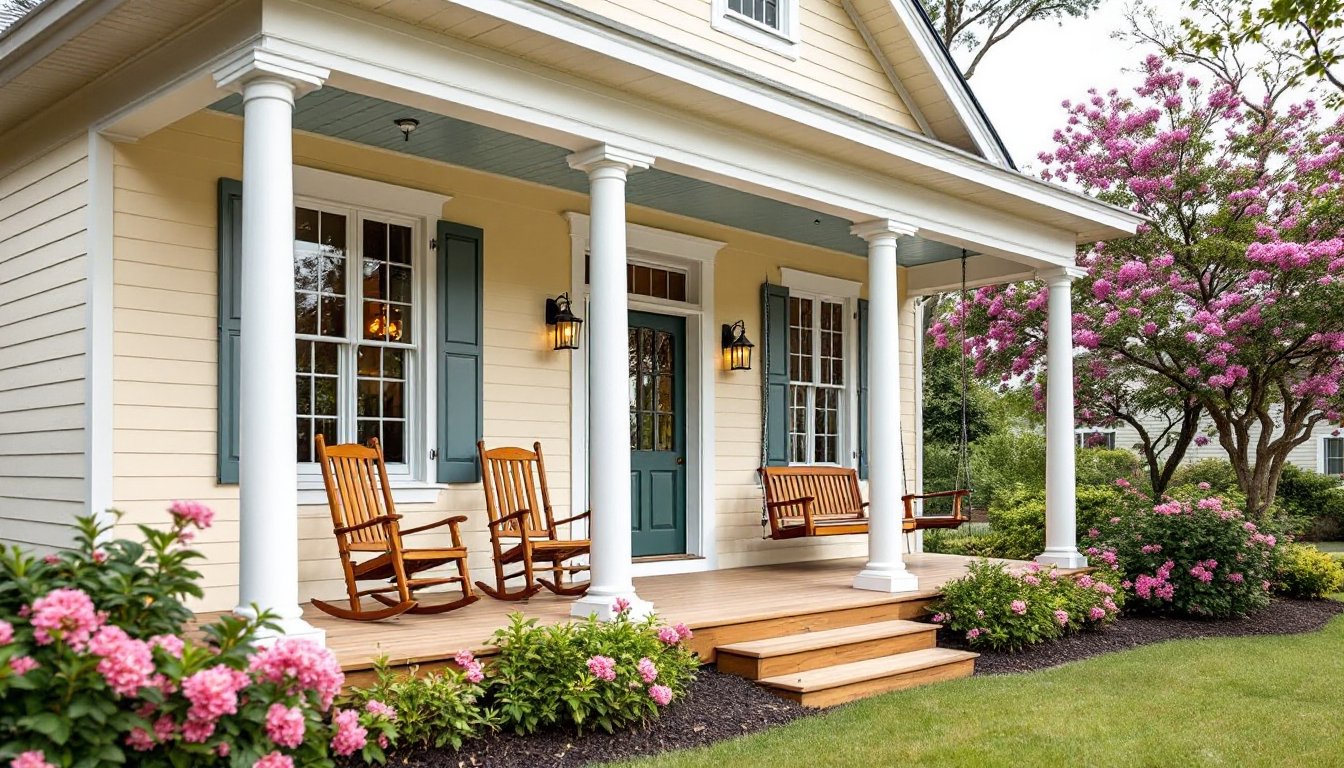
Wraparound porches are the most iconic Southern feature. If you’re building or expanding a porch, plan for a minimum depth of 8 feet to accommodate furniture and foot traffic. Use 2×6 tongue-and-groove decking for a traditional look, and space joists at 16 inches on center to meet IRC load requirements.
Beadboard ceilings are another signature element. Install 4-inch-wide beadboard planks or panels on your porch ceiling, running perpendicular to the house. Paint them a light blue or white to reflect light and visually cool the space. This is an accessible DIY project, use a nail gun and construction adhesive for a secure bond.
Shutters serve both decorative and functional roles. For authenticity, shutters should be sized to cover the window when closed. Measure your window width, divide by two, and order shutters to match. Mount them with shutter dogs (holdbacks) for a traditional look. If you’re in a hurricane-prone region, consider functional board-and-batten shutters that can actually be closed.
Interior wainscoting adds texture and protects walls from wear. Install beadboard panels to a height of 32 to 36 inches, topped with a 1×4 cap rail. Use a level and a stud finder to ensure secure attachment, drywall anchors won’t hold up over time. Paint the wainscoting in a semi-gloss finish for easy cleaning.
Hardwood flooring is standard in Southern homes. If you’re refinishing existing floors, consider a natural or honey-toned stain rather than dark espresso. Light stains show less dust and keep rooms feeling open. For new installations, 3/4-inch solid oak or engineered hickory offers durability in humid climates. Allow the wood to acclimate in your home for at least 72 hours before installation to prevent warping.
Bringing Sweet Home Alabama Style Into Your Own Space
You don’t need a period home to capture Southern charm. Even modern builds or suburban ranches can incorporate these design principles with thoughtful updates.
Start with the front porch. If you don’t have one, a small stoop extension with a roof and columns can create a welcoming entry. Use 4×4 posts or larger for structural support, and add a simple gable or shed roof. Check local codes, most jurisdictions require permits for covered structures attached to the home.
For windows, swap out standard contractor-grade units for models with divided lites (grids between panes). Simulated divided lites (grids applied to the surface) are more affordable but look less authentic. If you’re replacing windows anyway, spend the extra $50 to $100 per unit for true divided lites.
Lighting choices matter. Avoid modern recessed cans in traditional spaces. Instead, use semi-flush mount ceiling fixtures with clear or seeded glass shades. For porches, pendant lanterns or wall-mounted carriage lights fit the aesthetic. Opt for warm white LEDs (2700K-3000K) to mimic incandescent glow.
Paint exteriors in classic combinations: white trim with soft gray, sage green, or butter yellow siding. Use 100% acrylic latex paint for siding and acrylic enamel for trim. Expect to cover 350 to 400 square feet per gallon for siding and slightly less for trim due to multiple coats.
Landscaping should feel lush but low-maintenance. Plant Southern magnolias, crepe myrtles, or azaleas near the foundation. Use 2 to 3 inches of hardwood mulch to retain moisture and suppress weeds. Avoid rock mulch in the South, it holds heat and can stress plants.
DIY Decor Ideas Inspired by Southern Charm
Furniture should be functional and inviting. For porch seating, a wooden swing or a pair of rocking chairs sets the tone. Build a simple swing frame using 4×4 pressure-treated posts set in concrete, with a 2×6 crossbeam. Hang the swing with galvanized chain and eye bolts rated for at least 500 pounds.
Inside, consider open shelving in the kitchen. Remove upper cabinet doors and add 1×10 pine shelves supported by heavy-duty brackets. Paint shelves to match trim, and display everyday dishes, this is practical storage that doubles as decor, a concept widely featured in Southern home design content.
Textiles add warmth without permanent commitment. Use linen or cotton slipcovers on sofas, and layer quilts or cotton throws in living areas. Avoid synthetics, they trap heat and don’t age as gracefully.
Wall treatments can be simple. Shiplap (or its modern equivalent, nickel-gap pine boards) creates texture without fuss. Install horizontally using a pneumatic brad nailer and finish with primer and semi-gloss paint. Leave a small gap between boards for a shadow line, use nickels as spacers during installation, hence the name.
Lighting fixtures made from aged brass, oil-rubbed bronze, or matte black finishes suit Southern interiors better than polished chrome. If you’re updating fixtures, ensure electrical boxes are rated for the weight, ceiling fans and chandeliers require fan-rated or heavy-duty boxes.
For quick updates, replace standard door hardware with lever-style handles in a matching finish. Most interior doors use a standard 2-3/8-inch backset, so swaps are straightforward. Wear safety glasses when drilling, and use a hole saw if you need to enlarge the bore for a new lockset.
Finally, don’t overlook the power of paint. A fresh coat in a historically accurate color can transform a room. Resources like Better Homes & Gardens offer seasonal palettes rooted in classic design, which align well with Southern interiors.
Conclusion
Jean Smart’s role in Sweet Home Alabama helped cement the film’s visual identity, and the architecture featured throughout remains a touchstone for Southern-inspired home design. By focusing on key elements, wraparound porches, natural materials, classic color palettes, and durable finishes, you can bring that same sense of warmth and authenticity into your own projects. Whether you’re adding a porch, refinishing floors, or simply swapping out light fixtures, these updates honor a tradition of craftsmanship that’s as practical as it is beautiful.