Table of Contents
ToggleA quality miter saw blade transforms a decent tool into a precision powerhouse. The difference between a clean, splinter-free cut and a ragged mess often comes down to the blade spinning on that arbor. Whether you’re installing crown molding, framing a deck, or building custom furniture, the right blade keeps your cuts crisp and your project on track. But walk down the blade aisle at any big-box store and you’ll face dozens of options, different tooth counts, kerf widths, carbide grades, and price points. This guide cuts through the noise to help you find the best miter saw blades for your specific work, so you spend less time sanding and more time building.
Key Takeaways
- A high-quality miter saw blade features carbide-tipped teeth (C3 or C4 grade) that stay sharp 10-50 times longer than steel and handle heat from high-speed cuts without dulling.
- Choose tooth count based on your work: 40-60 teeth for general crosscutting, 60-80 for fine trim work, and 24-32 for fast framing cuts.
- Thin-kerf blades require less motor power and waste less material, making them ideal for underpowered saws or expensive hardwoods, while full-kerf blades offer more stability in heavy-duty cuts.
- The best miter saw blade matches your specific material, saw’s power level, and desired finish quality—there’s no single universal blade for every project.
- Carbide blades can be professionally resharpened 3-5 times before wearing out, making premium blades a cost-effective long-term investment compared to disposable options.
What Makes a Miter Saw Blade High-Quality?
A high-quality miter saw blade isn’t just sharp, it’s engineered for durability, precision, and the specific material you’re cutting. Here’s what separates the best from the rest:
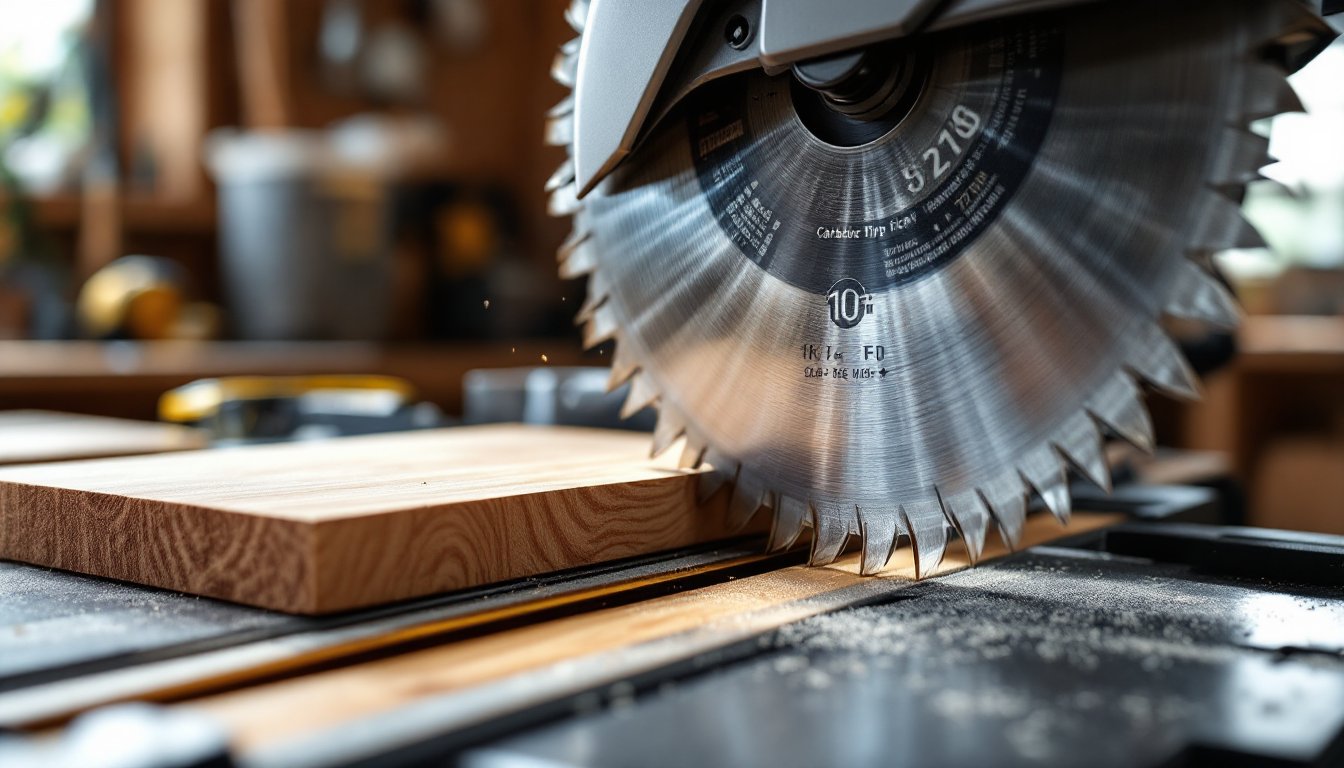
Carbide-Tipped Teeth: Premium blades feature carbide tips brazed onto steel bodies. Carbide stays sharp 10-50 times longer than standard steel and withstands the heat generated by high-speed cuts. Look for C3 or C4 carbide grades: they handle hardwoods and composite materials without dulling quickly.
Tooth Count and Geometry: More teeth generally mean smoother cuts, but they also cut slower. A 40-tooth blade balances speed and finish for general crosscutting. Fine trim work benefits from 60-80 teeth, while framing lumber cuts faster with 24-32 teeth. Tooth geometry matters too, Alternate Top Bevel (ATB) teeth slice cleanly across wood grain, while Triple Chip Grind (TCG) teeth tackle abrasive materials like laminate and aluminum.
Kerf Width: The kerf is the width of material the blade removes. Thin-kerf blades (around 0.090″) require less motor power and waste less wood, making them ideal for underpowered saws or expensive hardwoods. Full-kerf blades (0.125″) run more stable in heavy-duty cuts but demand more from your saw’s motor.
Expansion Slots and Anti-Vibration Features: Quality blades include laser-cut expansion slots that prevent warping from heat buildup. Some add dampening plugs or design tweaks to reduce vibration, which translates to cleaner cuts and less fatigue on your saw’s bearings.
Hook Angle: This is the angle at which teeth attack the wood. Positive hook angles (15-20°) pull aggressively for fast ripping: neutral or slightly negative angles (0-5°) offer more control for crosscuts and delicate trim. Most miter saw blades run 5-10° positive for balanced performance.
Top-Rated Miter Saw Blades for Different Materials
Matching blade to material makes all the difference. Here are the standouts for common jobs:
Best All-Purpose Miter Saw Blade
For the weekend warrior or contractor who cuts a mix of materials, a 50-60 tooth ATB blade with a thin kerf delivers versatility without compromise. The Diablo D1050X (10″, 50-tooth) earns consistent praise for clean crosscuts in everything from pine studs to oak trim. Its TiCo carbide blend resists heat, and the laser-cut stabilizer vents keep the blade true even after hours of use.
Another solid pick is the Freud LU84R011, a 10″ 50-tooth blade with a Hi-Density carbide formula that holds an edge through sheet goods, hardwoods, and even the occasional piece of pressure-treated lumber. It’s slightly pricier but pays off in blade longevity, you’ll resharpen less often, which saves money over time. Homeowners tackling workshop projects benefit from this kind of do-it-all blade that doesn’t force constant swaps.
Best Blade for Fine Woodworking and Trim
Trim carpenters and furniture builders need ultra-smooth cuts with minimal tearout. A 60-80 tooth blade with ATB or Hi-ATB tooth grind is the standard. The Forrest Woodworker II (10″, 80-tooth) is the gold standard, hand-straightened, precision-ground, and capable of cuts so clean you can skip sanding on most hardwoods. It’s expensive, but serious woodworkers swear by it.
For a more budget-friendly option without sacrificing much quality, the DeWalt DW3128P5 (80-tooth) offers excellent finish cuts at about half the price. It handles crown molding, picture frames, and delicate joinery with ease. Pair this with proper tool reviews to match your blade choice with your saw’s capabilities and you’ll achieve professional results on finish work.
Safety note: When cutting trim, always support both ends of long molding to prevent binding. Wear safety glasses, fine blades can eject small splinters at high velocity.
Best Blade for Framing and Rough Cuts
Speed matters more than glass-smooth edges when you’re cutting studs, joists, or deck boards. A 24-40 tooth blade with aggressive hook angles tears through dimensional lumber fast. The Diablo D0724A (7.25″, 24-tooth) is purpose-built for framing: its thin kerf and deep gullets clear sawdust quickly, reducing heat and binding in wet or treated lumber.
For 10″ and 12″ miter saws tackling heavy framing, the Freud LM72M010 (10″, 24-tooth) handles 2x material and engineered lumber without bogging down. The carbide is tough enough to survive the occasional hidden nail (though you should still avoid them when possible). Many contractors running home maintenance projects keep a dedicated framing blade to preserve their finish blades for cleaner work.
Pro tip: Framing blades dull faster in pressure-treated or engineered lumber due to the chemicals and adhesives. Inspect teeth regularly and swap out when you notice burning or tearout.
How to Choose the Right Miter Saw Blade for Your Project
Picking the best miter saw blade starts with understanding your project demands and your saw’s limits. Here’s a practical decision framework:
Match Blade Diameter and Arbor Size: This sounds obvious, but it’s the first filter. Most 10″ miter saws use a 5/8″ arbor: 12″ saws often use 1″. Never force a blade that doesn’t fit, using adapter bushings can create dangerous wobble.
Consider Your Saw’s Power: Underpowered saws (less than 15 amps) struggle with high tooth-count or full-kerf blades. If your motor bogs down mid-cut, switch to a thin-kerf or lower tooth-count blade. Conversely, pro-grade saws (like sliding compound models with 15+ amp motors) handle premium 80-tooth blades without breaking a sweat.
Prioritize Material Type:
- Softwoods (pine, cedar, fir): 40-60 teeth for general work, 24-32 for rough framing.
- Hardwoods (oak, maple, walnut): 60-80 teeth to minimize tearout and burning.
- Composite/Laminate (MDF, melamine, plywood): 60+ teeth with TCG or ATB grind: these materials are abrasive and splinter easily.
- Non-Ferrous Metals (aluminum, brass): Dedicated metal-cutting blades with TCG teeth and negative hook angles. Never use a wood blade on metal.
Evaluate Cut Quality vs. Speed: If you’re installing baseboards in a flip house, a 50-tooth blade gets the job done fast with acceptable finish. If you’re crafting heirloom furniture, spring for an 80-tooth blade and take your time. There’s no single “best” answer, just the right tool for the job.
Budget for Resharpening or Replacement: Carbide blades can be professionally sharpened 3-5 times before the carbide tips wear too thin. At $15-30 per sharpening, it’s often worth it for premium blades ($60+). Cheaper blades ($20-40) are usually disposable, replace them when they dull.
Safety Check: Before installing any blade, unplug the saw. Inspect the blade for cracks, missing teeth, or warping. Tighten the arbor nut snugly (hand-tight plus a quarter turn with the wrench, overtightening can distort the blade). Wear hearing protection when running miter saws: they often exceed 100 dB.
Conclusion
The best miter saw blade is the one matched to your material, your saw, and the finish quality you need. A versatile 50-60 tooth carbide blade covers most DIY and remodeling work, while dedicated framing and finish blades optimize specific tasks. Invest in quality carbide, maintain proper tooth count for your cuts, and don’t ask a single blade to do everything. With the right blade spinning, your miter saw delivers the precision cuts that make the difference between amateur and pro-level results.