
Table of Contents
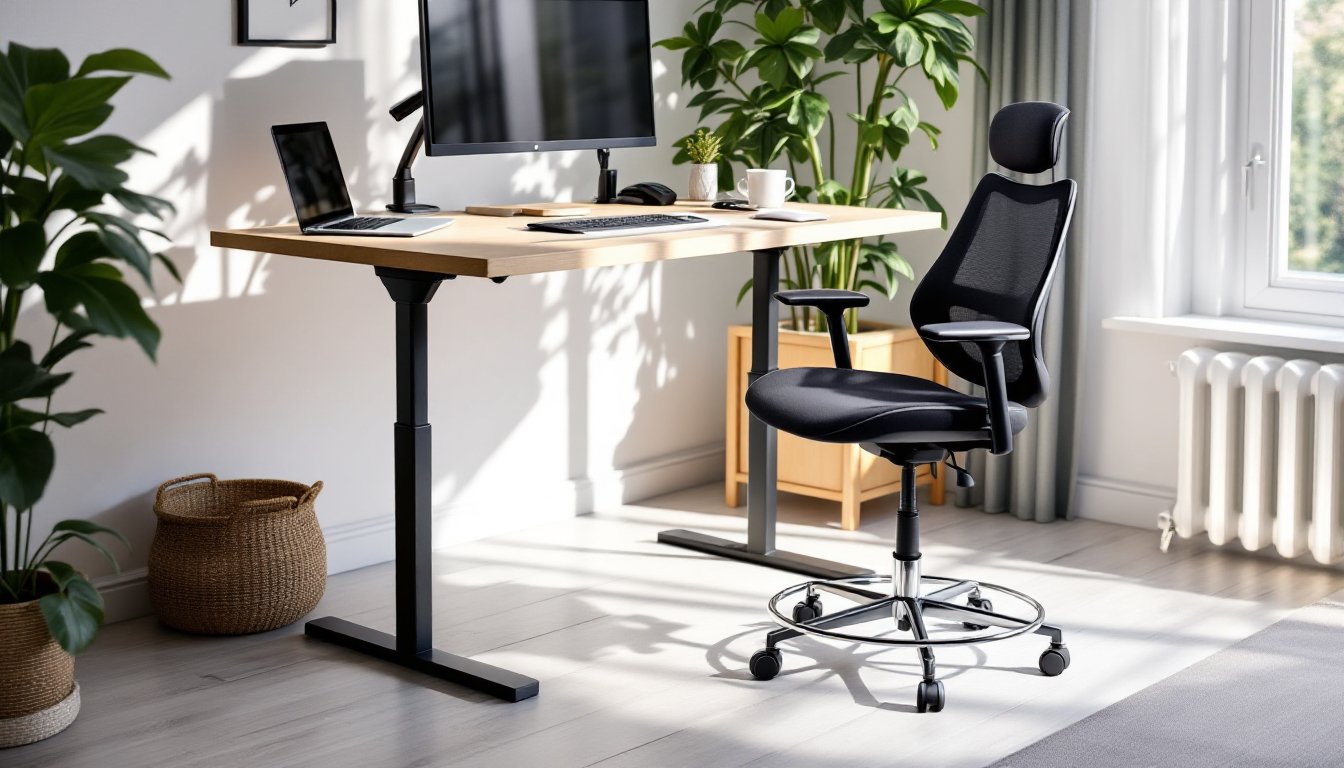
ToggleStanding desks promised freedom from back pain and an end to the sedentary slump. But here’s what the marketing materials don’t tell you: standing all day wrecks your feet, knees, and lower back just as fast as sitting ruins your posture. The solution isn’t picking sides, it’s alternating. A proper chair for a standing desk lets you switch positions throughout the day, giving your body the variety it needs. But not just any chair works with a taller desk surface. Standard office chairs max out too low, leaving you hunched like you’re working at a kid’s table. You need specific height range, solid adjustability, and often a footrest to make the setup work.
Key Takeaways
- A chair for a standing desk enables alternating positions every 30–60 minutes, which reduces fatigue better than standing or sitting alone.
- Look for a chair with a seat height range of 24–34 inches, a stable five-point base at least 24 inches in diameter, and proper lumbar support for ergonomic comfort.
- Your desk-to-seat drop should measure between 8 and 13 inches, with elbows at 90–110 degrees and feet resting flat on an integrated footring or footrest.
- Drafting stools, sit-stand leaning stools, and adjustable-height office chairs with extended lift ranges are the most reliable options for standing desk setups.
- Set transition cues with timers or calendar events to maintain a consistent sit-stand routine, and always verify your monitor height and chair stability before regular use.
Why You Need a Chair for Your Standing Desk Setup
Standing desks typically adjust between 29 and 48 inches in height. When raised for standing work, that same surface sits too high for a standard office chair, which usually tops out around 21 inches from the seat to the floor. Sit down at your standing desk without adjusting it, and your shoulders hunch up, your wrists bend at awkward angles, and your neck cranes forward.
The real benefit of a standing desk isn’t standing, it’s movement. Ergonomics research consistently shows that alternating positions every 30 to 60 minutes reduces fatigue and discomfort better than either sitting or standing alone. A tall office chair for standing desk ergonomic setups lets you make those transitions without cranking the desk up and down constantly.
Some people skip the chair entirely and drop their desk each time they want to sit. That’s fine if you only switch once or twice a day. But if you’re shifting positions frequently, which you should be, a compatible chair saves time and keeps you from breaking workflow. Plus, a proper perch gives you a third option between full standing and full sitting, which many find hits a sweet spot for focused work.
Key Features to Look for in a Standing Desk Chair
Not all tall chairs are created equal. Here’s what separates a functional standing desk chair from a wobbly barstool with delusions of grandeur.
Seat height range is the first spec to check. Look for a chair that adjusts from roughly 24 to 34 inches from the floor to the seat pan. That range covers most standing desk heights when the surface is set between mid-thigh and elbow level for sitting.
Stable base and casters matter more than you’d think. Taller chairs have a higher center of gravity, making them prone to tipping if the base is too narrow. A five-point base with a diameter of at least 24 inches keeps things stable. Hard-floor casters or glides should lock when you don’t want the chair drifting mid-email.
Lumbar support and seat tilt keep your spine in a neutral position. Fixed-angle seats force you into one posture: adjustable tilt lets you shift your pelvis and low back as needed throughout the day. Pneumatic (gas-lift) adjustments are standard, but verify the cylinder is rated for the extended height range, cheap mechanisms fail faster under leverage.
Height Adjustability and Footrest Support
When you’re perched at 30+ inches, your feet likely won’t touch the floor, and dangling legs cut off circulation and load your lower back unevenly. A built-in footring (the metal loop around the base of drafting stools) gives you somewhere to plant your feet.
Footrings should sit 8 to 12 inches off the floor and offer enough diameter that you can shift foot positions. Fixed-height rings work, but adjustable ones let different users find their comfort zone without fighting over the gas-lift setting.
If the chair lacks a footrest, you’ll need a separate platform. Stackable wood or metal footrests work, but they don’t move with the chair, so you’re constantly kicking them out of the way when you roll. Built-in support keeps everything tidy and mobile. Many woodworkers who tackle furniture building tutorials add custom footrest mods to existing chairs with decent results, though stability can be hit-or-miss depending on design.
Best Types of Chairs for Standing Desks
You’ve got four main chair categories that pair with standing desks, each with trade-offs.
Drafting stools are the classic choice. They’re built specifically for elevated work surfaces, with tall gas lifts, footrings, and backs that support upright postures. The better models include lumbar adjustment and seat depth options. Downsides: they’re often pricier than standard office chairs, and some sacrifice padding for a slim profile.
Sit-stand stools (also called leaning stools or perch seats) split the difference between sitting and standing. You lean your weight against a tilted or saddle-shaped seat while your legs take some load. They promote micro-movements and core engagement. Trade-off: they’re not comfortable for long sits, most people use them for 15- to 30-minute intervals, not full work sessions.
Adjustable-height office chairs with extended lift range look like standard desk chairs but include taller pneumatic cylinders. These work well if you want familiar ergonomics and don’t mind the aesthetic of an office chair at bar-stool height. Just verify the specs, many “high-back executive” chairs still cap out at 22 inches.
DIY and modded seating shows up more than you’d expect. Some users adapt shop stools, add furniture risers to existing chairs, or build custom pieces from scratch. For example, creative minds at IKEA Hackers have documented mods that turn affordable stools into surprisingly functional perches with added footrests and upgraded cushions. The caveat: home-built solutions rarely offer the same adjustability or safety margins as purpose-built commercial seating, so test thoroughly and don’t skimp on base stability.
How to Choose the Right Chair Height for Your Desk
Getting the height dialed in isn’t guesswork, it’s basic ergonomics and a tape measure.
Start by setting your standing desk to a comfortable typing height while standing. Your elbows should hang at roughly 90 to 110 degrees when your fingers rest on the keyboard. For most people, that puts the desk surface somewhere between 38 and 46 inches off the floor, depending on overall height.
Now sit in your chair (adjusted to max height if you’re testing fit) and check the same elbow angle. Your forearms should be parallel to the floor or angled slightly downward, with your wrists in a neutral position, not cocked up or down. If your shoulders hunch or your elbows splay out, the chair’s too low. If you’re reaching down like you’re playing a kids’ piano, it’s too high.
Measure your desk-to-seat drop. Subtract your seated elbow height from the desk surface height. That number should fall between 8 and 13 inches for most adults. For example, if your desk sits at 42 inches and your seated elbow is at 30 inches, you’ve got a 12-inch drop, right in the sweet spot.
Don’t forget your feet. Once the seat height is set, your feet should rest flat on the footring or footrest with your knees bent between 90 and 120 degrees. Thighs should slope slightly downward from hips to knees, not compressed upward into your belly.
If you share the desk with someone significantly taller or shorter, look for chairs with a wider adjustment range and easy-to-reach levers. Fumbling with a stiff pneumatic release five times a day gets old fast.
Setting Up Your Chair and Desk for Maximum Comfort
Buying the right chair is half the job. Setup and habit matter just as much.
Start neutral. Adjust your chair so your pelvis tilts slightly forward, your lumbar curve is supported, and your feet rest comfortably. Your monitor should sit at arm’s length, with the top of the screen at or slightly below eye level. If you’re perched higher than usual, you may need to raise your monitor with a stand or stacked risers to avoid neck strain.
Set transition cues. The best sit-stand routine is the one you actually follow. Some people set timers: others tie position changes to calendar events (stand during calls, sit for deep work). If you’re leaning toward a DIY desk build or a custom setup, detailed plans like those found in a vintage schoolhouse chair project can inspire integrated solutions, though that style won’t typically suit modern height-adjustable desks.
Mind your flooring. Tall chairs with hard casters can scuff hardwood or tear up carpet. Use a chair mat rated for your floor type, and check that it’s thick enough to stay flat under a heavier, taller chair. Rubber or felt glides work for stationary setups.
Safety check. Taller chairs tip more easily. Don’t lean back hard without testing the chair’s tilt tension first, and never stand on the seat or footring to reach overhead storage, step stools exist for a reason. If the chair feels wobbly, check that the base isn’t cracked and that the gas cylinder is seated fully in the mechanism.
PPE note: If you’re modifying a chair or building a footrest, wear safety glasses when cutting metal or wood, and use a dust mask if sanding or drilling composite materials indoors.
Conclusion
A standing desk without a proper chair is like a miter saw without a workbench, technically functional, but you’re missing half the system. The right tall office chair for standing desk ergonomic setups gives you the flexibility to move between postures without constant desk adjustments or postural compromise. Prioritize height range, footrest support, and stable construction, and don’t settle for a standard office chair on tiptoes. Measure twice, sit once, and your back will thank you by 3 p.m.