
Table of Contents
ToggleIf you’ve got hard water, you know the drill, chalky faucets, dull dishes, and soap that won’t lather properly. A water softener fixes the problem, but it needs a steady supply of salt to keep working. That’s where Costco comes in. For homeowners dealing with regular water softener maintenance, buying salt in bulk from a warehouse store can save money and cut down on shopping trips. But not all water softener salt is the same, and knowing what’s available at Costco, and what you’ll actually pay, makes the difference between smart shopping and overspending on the wrong product.
Key Takeaways
- Costco water softener salt typically costs $5 to $8 per 40-pound bag, saving homeowners $20 to $50 annually compared to big-box home improvement stores.
- Solar salt crystals and pellet salt are the two main types available at Costco, with pellets offering higher purity and less maintenance for high-efficiency systems.
- Water softener salt should be stored in dry, climate-controlled spaces on wooden pallets to prevent moisture absorption and clumping.
- Check your softener’s specifications before buying to confirm purity ratings and avoid rock salt, which can damage your system’s resin tank.
- Costco’s bulk pricing and year-round inventory availability make it an ideal retailer for regular water softener maintenance needs.
Why Choose Costco for Water Softener Salt?
Costco’s business model revolves around bulk purchasing and high turnover, which translates to lower prices on everyday household items, including water softener salt. Most big-box home improvement stores sell salt in 40-pound bags, but they’re often priced higher per pound than what you’ll find at Costco. Warehouse pricing means homeowners can stock up without the markup.
Another advantage: convenience. If you’re already shopping for groceries or household supplies, grabbing a couple of salt bags on the same trip saves time. Costco typically stocks salt year-round, though availability can vary by location. Smaller independent retailers may run low during peak hard water seasons (usually winter and spring), but Costco’s inventory management keeps shelves restocked.
The membership model also filters out casual shoppers, which means less crowding in the aisles when you’re hauling 80-pound bags to your cart. For anyone managing a household water softener, the combination of price, availability, and logistics makes Costco a solid choice. Just remember to check your local warehouse’s stock before making a special trip, inventory can shift based on regional demand and supplier relationships.
Types of Water Softener Salt Available at Costco
Costco typically carries two main types of water softener salt: solar salt crystals and pellet salt (also called compressed salt). Each has its own pros and cons, and the right choice depends on your softener model, water hardness, and how much maintenance you want to deal with.
Solar Salt Crystals
Solar salt is produced by evaporating seawater or brine in large outdoor pools. The resulting crystals are coarse, irregularly shaped, and generally less expensive than pellets. Costco often stocks solar salt in 40-pound or 50-pound bags, sometimes under the Diamond Crystal or Morton brand (though availability varies by region).
Solar salt works well in most residential water softeners, especially if your system has a larger brine tank. Because the crystals are less uniform, they can dissolve more slowly than pellets, which means less frequent refilling but a slightly higher chance of salt bridging, a hard crust that forms above the water line and prevents proper regeneration. If you’re using solar salt, it’s smart to check the brine tank every few months and break up any crusts with a broom handle or similar tool.
One bonus: solar salt is often the most budget-friendly option. For homeowners with moderate water hardness and a reliable softener, it’s an effective way to keep costs down without sacrificing performance. Some users find that solar salt works better in warmer climates where evaporation rates are higher and bridging is less of an issue.
Pellet Salt
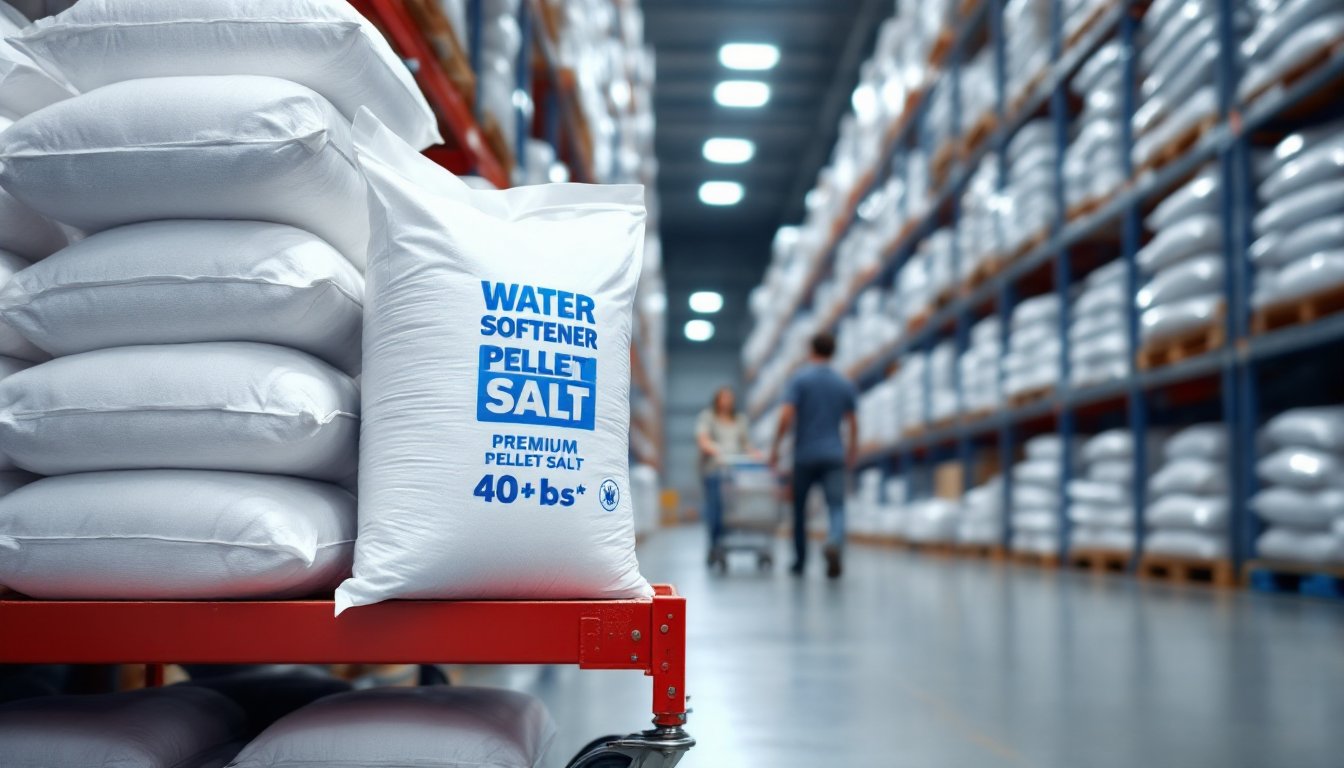
Pellet salt (sometimes labeled as “compressed salt” or “evaporated salt”) is made by compressing refined salt into uniform, cylindrical pellets. This manufacturing process removes more impurities, resulting in a cleaner product that dissolves more consistently. Costco stocks pellet salt in similar bag sizes, usually 40 or 50 pounds, and pricing is typically a bit higher than solar salt.
Pellet salt is the go-to choice for high-efficiency water softeners and systems with smaller brine tanks. The uniform shape and purity reduce the risk of bridging and mushing (when undissolved salt forms a sludge at the bottom of the tank). If your softener manufacturer recommends high-purity salt, pellets are the safer bet.
For households with very hard water, above 10 grains per gallon, pellet salt helps maintain system efficiency and extends the life of resin beads inside the softener. It’s also less likely to leave insoluble residue, which means fewer cleanings and less long-term maintenance. The extra cost is usually worth it if you’re running a modern, high-capacity system that cycles frequently.
How Much Does Water Softener Salt Cost at Costco?
As of early 2026, water softener salt cost at Costco typically ranges from $5 to $8 per 40-pound bag, depending on type and regional pricing. Solar salt crystals are usually on the lower end of that range, while high-purity pellet salt pushes toward the upper limit. Prices fluctuate based on supplier costs, seasonal demand, and warehouse location, coastal areas with higher shipping costs may see slightly higher prices.
Compare that to big-box home improvement stores, where the same 40-pound bags often run $7 to $10 or more. Over the course of a year, Costco’s pricing can save a household anywhere from $20 to $50, depending on how much salt the softener consumes. For a family of four with moderately hard water, expect to use around 8 to 10 bags per year, so the savings add up.
Costco occasionally runs promotions on water softener salt, especially during spring and early summer when demand peaks. Keep an eye on the warehouse’s monthly coupon book or check the Costco app for temporary markdowns. Buying in bulk during a sale can stretch your budget even further, especially if you have garage or basement space for storage.
It’s also worth noting that Costco’s Kirkland Signature brand sometimes offers water softener salt at a lower price point than name brands. The quality is generally comparable, since most Kirkland products are manufactured by major suppliers and simply rebranded. If you see Kirkland salt on the shelf, it’s usually safe to grab, just check the purity rating on the label to confirm it matches your softener’s requirements.
For homeowners curious about comparing water softener maintenance costs across different retailers, tracking your per-pound price over time gives you a clearer picture of long-term savings. A simple spreadsheet or note on your phone can help you decide when to stock up and when to wait for a better deal.
How to Buy and Store Water Softener Salt from Costco
Buying water softener salt at Costco is straightforward, but a little planning makes the process smoother, especially if you’re hauling multiple bags. Here’s what to keep in mind.
First, bring a sturdy cart or flatbed if you’re buying more than two bags. A 40-pound bag is manageable for most people, but loading four or five into a shopping cart can get awkward. Costco provides flatbed carts near the entrance, and they’re ideal for heavy bulk items. If you have back issues or limited lifting capacity, ask a warehouse employee for help, they’re used to assisting with heavy loads.
Next, check the label before you buy. Not all water softener salt is identical, even within the same brand. Look for the purity percentage (usually 99.5% or higher for pellet salt) and confirm it matches your softener’s specifications. Some bags are labeled “rock salt,” which is meant for ice melting, not water softening. Using the wrong product can damage your system’s resin tank and void your warranty.
Once you’re home, proper storage is critical. Water softener salt is hygroscopic, meaning it absorbs moisture from the air. Store bags in a dry, climate-controlled space, a garage, utility room, or basement works well as long as it’s not damp. Stack bags on a wooden pallet or plastic shelf to keep them off concrete floors, which can wick moisture and cause clumping.
If you open a bag and don’t use it all at once, transfer the remaining salt to a sealed plastic bin or keep the bag tightly closed with a bungee cord or heavy-duty clip. Exposure to humidity will cause the salt to harden, making it difficult to pour into your softener’s brine tank.
For households with limited storage, buying in smaller quantities more frequently is an option, but you’ll lose some of the cost savings. If you’ve got the space, stocking up during a Costco sale and storing properly keeps your per-pound cost low without frequent shopping trips. Many DIY homeowners recommend setting a calendar reminder to check salt levels every two months, especially if your softener doesn’t have a low-salt indicator.
Safety tip: Always wear gloves when handling salt bags, especially if they’ve been sitting in a warehouse or garage. The bags can pick up dust, and prolonged skin contact with salt can cause dryness or irritation. If you’re pouring salt into the brine tank, consider wearing safety glasses to keep granules out of your eyes, it’s an easy precaution that prevents unnecessary discomfort.
Conclusion
Costco offers a practical, cost-effective solution for homeowners who need a steady supply of water softener salt. With competitive pricing, reliable inventory, and quality options like solar crystals and pellet salt, it’s a smart stop for anyone managing hard water. By understanding the types available, knowing what you’ll pay, and storing your salt properly, you’ll keep your water softener running smoothly without overspending or scrambling for last-minute refills.