
Table of Contents
ToggleMaking the switch to organic dishwasher detergent isn’t just about cleaner dishes, it’s about reducing the chemical load in your home. Conventional dishwashing detergents often contain synthetic fragrances, phosphates, and chlorine bleach that can leave residues on plates, glasses, and silverware. Those residues don’t just sit there: they transfer to food and get ingested by your family. For homeowners serious about creating a healthier living environment, organic options offer a straightforward solution without sacrificing cleaning power.
Key Takeaways
- Organic dishwasher detergent eliminates harmful chemical residues like phosphates and synthetic fragrances that transfer to food and can cause allergic reactions, skin irritation, and respiratory issues.
- Plant-based enzymes (protease, amylase, lipase) in organic formulas work effectively at lower temperatures while being biodegradable and safe for septic systems and aquatic ecosystems.
- Look for third-party certifications like EPA Safer Choice and USDA Certified Biobased when selecting organic dishwasher detergent to verify safety and environmental claims.
- You can make DIY organic dishwasher detergent at home using just washing soda, baking soda, salt, and citric acid for significant cost savings.
- Pre-rinsing dishes, using the appropriate wash cycle, and maintaining your dishwasher filter maximize the performance of organic detergent and prevent spotting and filming.
What Is Organic Dishwasher Detergent?
Organic dishwasher detergent uses plant-based or mineral-derived ingredients instead of synthetic chemicals to break down food residue, cut through grease, and prevent hard water spots. The term “organic” in this context typically means the formula avoids petroleum-based surfactants, artificial dyes, synthetic fragrances, and harsh additives like phosphates or chlorine.
Most organic formulas rely on enzymes (protease, amylase, lipase) to digest proteins, starches, and fats, paired with natural surfactants derived from coconut, corn, or sugar beets. They often include citric acid for water softening and spot prevention, along with essential oils for a light, natural scent.
These detergents come in multiple forms: powder, gel, tablets, and pods. Powder tends to dissolve slower in cooler water cycles but stores longer without clumping. Tablets and pods offer pre-measured convenience but can cost more per load. Gels dissolve quickly but may contain more preservatives to maintain shelf stability.
It’s worth noting that “organic” isn’t a regulated term for dishwasher detergents the way it is for food. Look for third-party certifications like USDA Certified Biobased Product, EPA Safer Choice, or Leaping Bunny (cruelty-free) to verify claims.
Why Switch to Organic Dishwasher Detergent?
The primary reason homeowners make the switch is reduced chemical exposure. Conventional detergents leave microscopic residues on dishware that don’t fully rinse away. Over time, ingesting trace amounts of synthetic surfactants, chlorine compounds, and artificial fragrances can contribute to allergic reactions, skin irritation, and respiratory issues, especially in kids and people with sensitivities.
Organic formulas also perform better in septic systems. Phosphates and other harsh chemicals can disrupt the bacterial balance in septic tanks, leading to slower waste breakdown and potential system failure. Plant-based ingredients biodegrade more readily and won’t throw off that balance.
Environmental impact is another factor. Phosphates, once common in dishwasher detergent, cause algal blooms in waterways that deplete oxygen and kill aquatic life. While many conventional brands have removed phosphates, they’ve replaced them with other questionable chemicals. Organic options tend to use biodegradable ingredients that break down harmlessly after treatment.
Finally, there’s the indoor air quality consideration. Synthetic fragrances release volatile organic compounds (VOCs) during the wash cycle, especially in the heat and steam. These compounds linger in your kitchen air. Natural formulas either skip fragrance entirely or use essential oils that don’t off-gas the same way.
Key Ingredients to Look for in Organic Formulas
When reading labels, prioritize detergents with plant-derived enzymes. Protease breaks down protein-based stains (eggs, dairy, meat), amylase handles starches (pasta, rice, potatoes), and lipase tackles fats and oils. These enzymes work at lower temperatures than harsh chemicals, which saves energy and protects delicate dishware.
Sodium carbonate (washing soda) and sodium bicarbonate (baking soda) serve as mild alkalis that lift grease and neutralize odors. They’re non-toxic, biodegradable, and safe for septic systems. Citric acid is a natural chelating agent, it binds to minerals in hard water, preventing them from depositing as cloudy spots on glassware.
For surfactants, look for decyl glucoside, lauryl glucoside, or coco-glucoside. These are derived from coconut oil and glucose, and they break surface tension to help water penetrate and lift food particles. They’re gentle on skin but tough on grease.
Avoid detergents with sodium lauryl sulfate (SLS) or sodium laureth sulfate (SLES), while technically derived from coconut, the manufacturing process involves harsh chemical reactions and produces toxic byproducts. Also skip anything with chlorine bleach, phosphates, parabens, synthetic dyes, or artificial fragrances.
Some formulas include oxygen bleach (sodium percarbonate), which is safer than chlorine bleach and effective for whitening and stain removal. It breaks down into water, oxygen, and soda ash, all harmless.
How to Choose the Best Organic Dishwasher Detergent for Your Home
Start by assessing your water hardness. Hard water contains high levels of calcium and magnesium, which interfere with detergent performance and leave mineral deposits. If you have hard water (above 7 grains per gallon), choose a formula with extra citric acid or add a separate rinse aid. Some organic brands formulate specifically for hard water.
Consider your dishwasher type. Older models with less efficient spray arms benefit from powder detergents, which tend to be more aggressive. Newer, high-efficiency dishwashers perform best with low-sudsing formulas, most organic detergents are low-suds by design, but double-check if you have an Energy Star-rated machine.
Load type matters, too. If you regularly wash heavily soiled pots, pans, and baking sheets, you’ll need a detergent with strong enzyme activity and possibly oxygen bleach. For lighter loads, mostly glassware and lightly used plates, a simpler formula works fine and costs less per load.
Check for certifications. EPA Safer Choice means every ingredient meets strict safety criteria. USDA Certified Biobased verifies the percentage of plant-based content. If you have pets or small children who might lick dishware, certifications matter more.
Many kitchen organization experts recommend testing a small box or single-use pack before committing to bulk purchases. Organic detergents can vary in performance based on water chemistry and dishwasher model.
DIY Organic Dishwasher Detergent: Simple Recipe You Can Make at Home
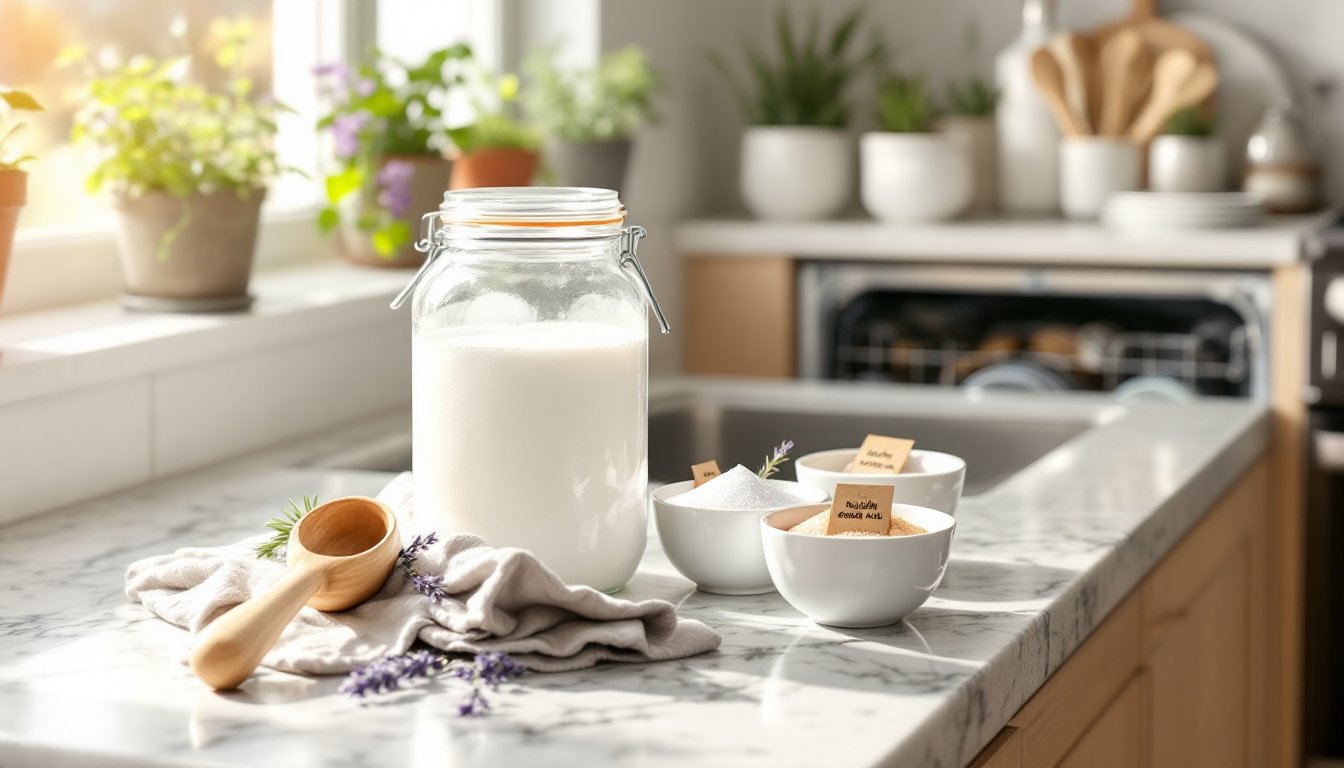
Making your own organic dishwasher detergent is straightforward and cuts costs significantly. You’ll need just three base ingredients and an optional fourth for hard water.
Materials:
- 1 cup washing soda (sodium carbonate, not baking soda)
- 1 cup baking soda (sodium bicarbonate)
- 1/2 cup kosher salt or coarse sea salt
- 1/2 cup citric acid (optional but recommended for hard water)
- Airtight glass or plastic storage container
Instructions:
- Combine all dry ingredients in a large mixing bowl.
- Stir thoroughly to distribute the citric acid evenly, it tends to clump if not mixed well.
- Transfer to an airtight container. A wide-mouth mason jar works well for scooping.
- Use 1 to 2 tablespoons per load, depending on soil level and water hardness. Start with 1 tablespoon and adjust.
- Store in a cool, dry location. Humidity causes clumping: if that happens, break it up with a fork or add a few grains of rice to absorb moisture.
Optional add-in: A few drops of lemon or lavender essential oil per batch adds a subtle scent. Don’t exceed 10 drops total, or you’ll leave oily residues.
This formula works best in dishwashers with a pre-rinse cycle or when dishes are scraped clean beforehand. It won’t tackle heavy, baked-on food as aggressively as commercial enzymes, but for everyday loads, it’s more than adequate. Some cleaning experts suggest pairing this DIY detergent with white vinegar in the rinse aid compartment to boost spot prevention.
Tips for Getting the Best Results with Organic Detergent
Pre-rinse strategically. Most organic formulas rely on enzymes that work best on loosened debris, not dried, crusted food. A quick scrape or 10-second rinse under the tap prevents enzyme overload and ensures cleaner results.
Load dishes correctly. Overloading blocks spray arms and prevents water from reaching all surfaces. Face heavily soiled surfaces toward the center, where spray pressure is strongest. Avoid nesting bowls or stacking plates too tightly.
Use the right cycle. Organic detergents often need slightly longer wash times or higher temperatures to activate enzymes fully. Most dishwashers have a “heavy” or “pots and pans” cycle that runs hotter and longer, use it for greasy loads. For lightly soiled items, the “eco” or “light” cycle conserves water and energy without sacrificing performance.
Check your rinse aid dispenser. Even organic detergent benefits from a rinse aid, which reduces surface tension and prevents water spots. Use a plant-based rinse aid or white vinegar. Fill the dispenser to the lowest setting first: you can always increase if spotting occurs.
Clean the filter monthly. A clogged filter reduces water circulation and leaves food particles recirculating onto clean dishes. Most dishwasher filters twist out from the bottom of the tub. Rinse under hot water and scrub with a soft brush.
Run hot water before starting. If your dishwasher is far from the water heater, run the kitchen tap until water turns hot. This ensures the first fill cycle uses hot water, which activates enzymes immediately.
If you notice a white film on glassware, that’s hard water buildup, not detergent residue. Increase citric acid in DIY formulas or switch to a commercial organic detergent rated for hard water. Many appliance reviews confirm that water hardness, not detergent quality, is the most common cause of spotting and filming.
Conclusion
Switching to organic dishwasher detergent is one of the simplest upgrades a homeowner can make for a healthier home. Whether you buy certified formulas or mix your own from washing soda and citric acid, you’ll reduce chemical exposure, protect your septic system, and cut down on environmental harm, all without sacrificing clean dishes. Start with a small batch or single box, dial in your dosage and cycle settings, and you’ll never look back.