
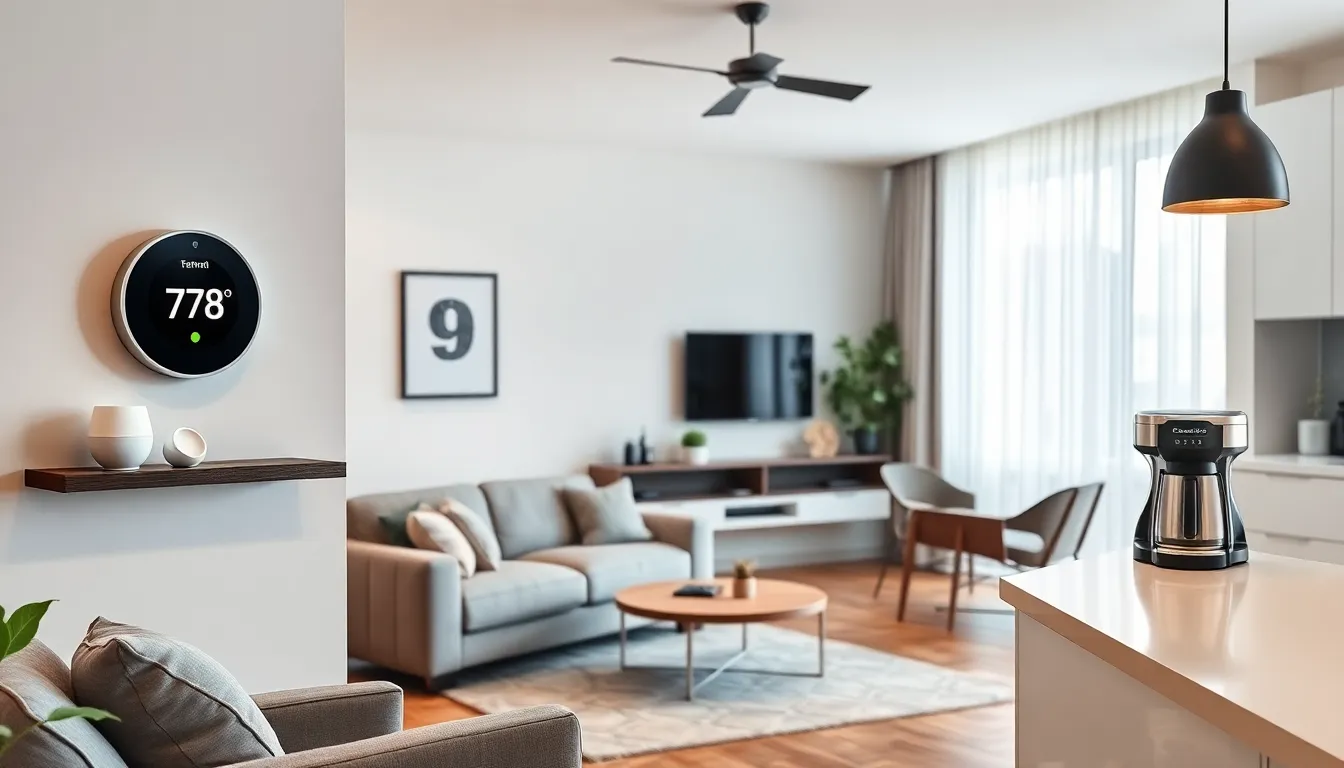
Imagine waking up to the perfect cup of coffee brewed just the way you like it, all thanks to your smart home. With AI technology seamlessly integrated into daily life, homes are becoming more than just four walls—they’re evolving into intelligent, responsive environments. Gone are the days of fumbling for light switches or worrying about whether you left the oven on.
Your home can learn your habits, anticipate your needs, and even tell you a joke or two when you need a laugh. From smart thermostats that adjust to your ideal temperature to voice-activated assistants that can manage your schedule, AI is transforming the mundane into the extraordinary. Embracing this technology not only adds convenience but also brings a touch of futuristic flair to everyday living. Welcome to the age of smart homes, where your house is not just a place to live but a partner in crime for a more enjoyable lifestyle.
Overview of AI in Smart Homes
AI technology plays a pivotal role in the development of smart homes, creating environments that respond intuitively to the inhabitants’ preferences. Smart devices gather data, which helps them learn individual habits and routines. For example, smart thermostats adjust temperatures based on user behaviors, ensuring optimal comfort while enhancing energy efficiency.
Automation also streamlines daily tasks. Voice-activated assistants allow homeowners to control appliances, lights, and security systems hands-free. Personalization contributes to a seamless living experience, as systems become accustomed to the occupants’ likes and dislikes. Companies like Google and Amazon continuously improve AI integration, driving innovation in this field.
Security benefits significantly from these advancements. AI-powered cameras and sensors identify unusual activity, alerting homeowners to potential threats. These features enable homeowners to monitor their properties remotely, adding an essential layer of safety.
Another important aspect of AI in smart homes is energy management. Intelligent systems analyze usage patterns, helping to minimize waste and optimize consumption. For instance, smart plugs can schedule appliances to run during off-peak energy hours, reducing utility costs.
Health monitoring has also emerged as a key feature. AI-enabled devices track vital signs and environmental conditions, promoting well-being. This capability allows for timely alerts, ensuring residents receive necessary medical attention when needed.
Overall, AI infuses smart homes with advanced capabilities, reshaping how people interact with their living spaces. The result is a more engaging and responsive home environment, enhancing both convenience and security.
Benefits of AI in Smart Homes

AI in smart homes brings numerous benefits that enhance daily living. These advantages include enhanced security and energy efficiency improvements.
Enhanced Security Features
Advanced security measures stem from AI integration. Smart cameras provide real-time surveillance, detecting unusual activity. Notifications alert homeowners instantly, enabling quick responses. AI’s facial recognition technology identifies familiar faces, reducing false alarms. Enhanced automation allows for timed lighting that simulates occupancy, deterring potential intruders. Homeowners gain peace of mind through remote monitoring, making it easy to check security from anywhere. Overall, these AI-powered features create a safer living environment.
Energy Efficiency Improvements
Energy efficiency receives significant boosts through AI applications. Smart thermostats learn occupants’ schedules and adjust temperatures accordingly, conserving energy. Appliance management systems analyze usage patterns, helping prioritize energy consumption. Scheduling washing machines or dishwashers during off-peak hours reduces electricity costs. Moreover, AI assists in detecting energy wastage through real-time monitoring. Homeowners enjoy lower utility bills while maintaining comfort levels. These energy-efficient solutions represent a smart investment for homeowners.
Popular AI Technologies Used
AI technology in smart homes significantly transforms daily living. It employs various advanced solutions, enhancing convenience, security, and energy efficiency.
Virtual Assistants
Virtual assistants serve as the central control point for smart homes. They respond to voice commands, allowing users to manage multiple devices effortlessly. These AI-driven assistants, such as Amazon Alexa and Google Assistant, facilitate tasks like setting reminders and streaming music. They integrate seamlessly with other smart devices, creating an ecosystem that simplifies daily routines. Homeowners appreciate the hands-free capability, which allows for multitasking. Additionally, machine learning enables these assistants to adapt to user preferences over time.
Smart Appliances
Smart appliances optimize household tasks through automation and AI. Refrigerators equipped with inventory management track food supplies and suggest recipes based on available ingredients. Ovens can preheat remotely and adjust cooking times based on the recipe provided via an app. Washing machines connected to Wi-Fi allow users to start or schedule cycles from their smartphones. These appliances not only enhance convenience but also support energy efficiency, learning usage patterns to minimize power consumption. Homeowners enjoy the ability to control their devices anytime, from anywhere.
Challenges and Considerations
Integrating AI into smart homes presents several challenges that homeowners must consider.
Privacy Concerns
Privacy remains a top concern with AI smart home technologies. Devices continuously collect data, creating potential risks for unauthorized access. Many users worry about how this data is stored and shared. Reports highlight incidents of security breaches that expose sensitive information. To mitigate risks, individuals must carefully review privacy policies and security features of smart devices. Implementing strong passwords and enabling two-factor authentication enhances security measures, preventing unauthorized access.
Cost and Accessibility
Cost and accessibility pose significant barriers to fully adopting AI in smart homes. The initial investment for smart devices can exceed thousands of dollars. Budget constraints deter some homeowners from upgrading to AI-enhanced technologies. Additionally, not all smart devices integrate seamlessly with existing home systems. Those without technical knowledge may face challenges in installation and operation. Choosing compatible devices and leveraging government incentives can help offset costs and promote widespread adoption.
Future of AI in Smart Homes
AI’s influence on smart homes continues to expand, positioning it as a cornerstone of modern living. Innovations in voice recognition technology enhance user interactions, making commands more intuitive. Experts predict that smart devices will evolve to offer even more personalized experiences tailored to individual preferences.
Security advancements stand out in the future landscape of AI. Future AI systems will likely utilize advanced analytics to predict potential security threats proactively. Automated alerts will provide homeowners with immediate responses to inconsistencies detected by smart cameras and sensors.
Energy management remains a critical focus for smart home advancements. Smart devices increasingly analyze real-time energy usage, suggesting more efficient schedules for appliances. Forecasts predict that AI will help homeowners achieve substantial energy savings, reinforcing the importance of eco-friendly living.
Health monitoring features are expected to become mainstream in future smart homes. Devices equipped with AI will continuously track health metrics, alerting users to any concerning changes. Integration with healthcare providers could streamline medical attention based on data collected from these devices.
As AI technology improves, interoperability is anticipated to enhance user experiences. Various smart devices are likely to integrate more seamlessly, creating unified systems that communicate effortlessly. These connections will allow homeowners to control their environments more efficiently and securely.
Ultimately, the future of AI in smart homes promises to reshape how individuals live. Envisioning an ecosystem where comfort, security, and efficiency converge sets the stage for innovative daily experiences. Emphasizing advancements in AI technology supports the ongoing evolution of intelligent living spaces.
Conclusion
The integration of AI in smart homes is revolutionizing how people interact with their living environments. As technology advances, homes are evolving into responsive spaces that enhance comfort and security while promoting energy efficiency. With AI-driven devices managing daily tasks and monitoring health, homeowners can enjoy a seamless lifestyle.
Challenges like privacy concerns and costs remain, but solutions are emerging to make smart home technology more accessible. The future promises even greater innovations, making homes not just places to live but active partners in everyday life. Embracing these changes will lead to a more convenient and secure living experience, paving the way for smarter homes and happier lives.